
No products in the cart.
Sterile Consumable Lifecycle Management in Pharmaceutical Manufacturing: From Incoming Inspection to Controlled Aseptic Use
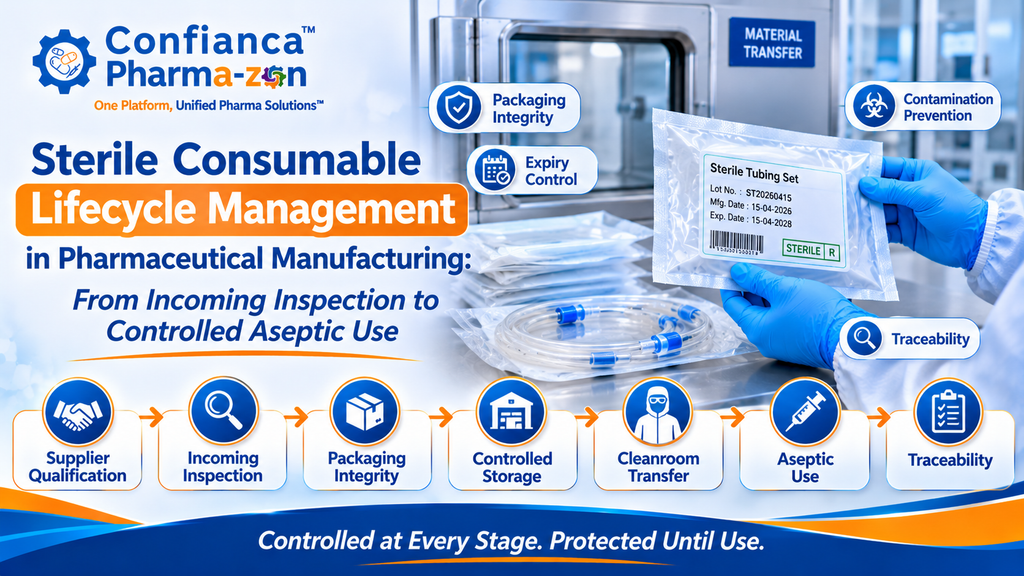
Introduction
Sterile consumables play an essential role in pharmaceutical manufacturing, particularly in facilities involved in sterile drug production, aseptic processing, microbiological testing, and controlled cleanroom operations.
These consumables are used throughout different manufacturing activities, from material transfer and equipment preparation to product filling, sampling, cleaning, and environmental monitoring.
Although sterile consumables may appear to be relatively simple supporting materials, their quality and handling can directly influence contamination control practices.
A sterile glove, tubing assembly, filter, wipe, transfer accessory, or other cleanroom component must remain suitable for its intended application throughout its entire lifecycle.
The presence of a sterile label alone does not guarantee that a consumable will remain suitable after improper storage, damaged packaging, incorrect handling, or uncontrolled transfer into a cleanroom.
This makes sterile consumable lifecycle management an important consideration for pharmaceutical manufacturers.
A systematic lifecycle approach considers the complete journey of a consumable, beginning with supplier qualification and incoming material inspection and continuing through storage, dispensing, transfer, aseptic handling, use, and disposal.
This article explains how pharmaceutical manufacturers can establish better control over sterile consumables, reduce contamination risks, improve material traceability, and strengthen aseptic manufacturing practices.
1. Understanding Sterile Consumables in Pharmaceutical Manufacturing
Sterile consumables are products intended for use in applications where a specified level of microbial control or sterility is required.
Depending on the manufacturing activity, these materials may include:
- Sterile gloves.
- Sterile cleanroom wipes.
- Sterile tubing and transfer assemblies.
- Sterile filters.
- Sterile sampling accessories.
- Sterile connectors.
- Sterile bags and containers.
- Sterile garments.
- Sterile funnels.
- Sterile process accessories.
- Other single-use pharmaceutical components.
These consumables may be used in manufacturing areas, filling operations, microbiology laboratories, and controlled cleanroom environments.
Their suitability depends on several factors, including material composition, intended application, compatibility, packaging configuration, sterilization status, and applicable product specifications.
Manufacturers should ensure that each consumable is appropriate for the intended process and controlled according to established quality procedures.
2. Why Sterile Consumable Lifecycle Management Matters
Sterile consumables pass through several handling stages before they are used in pharmaceutical manufacturing.
A failure at any stage can compromise their suitability.
For example, a sterile glove may be manufactured and packaged under controlled conditions. However, if its packaging is damaged during transportation or storage, its sterile status may no longer be assured.
Similarly, a sterile tubing assembly may be supplied with appropriate documentation but could become unsuitable if its protective packaging is opened prematurely or if the product is exposed to inappropriate environmental conditions.
Lifecycle management helps pharmaceutical manufacturers maintain control over these materials.
Its major objectives include:
- Maintaining packaging integrity.
- Ensuring appropriate storage conditions.
- Preserving sterility assurance.
- Maintaining material traceability.
- Preventing mix-ups.
- Supporting contamination control.
- Ensuring correct dispensing and handling.
- Maintaining appropriate documentation.
The goal is to control the consumable from receipt until its intended use is completed.
3. Supplier Qualification and Material Approval
The lifecycle of a sterile consumable begins with supplier evaluation and material approval.
Pharmaceutical manufacturers should establish a documented process to assess whether a supplier can consistently provide materials that meet the required specifications.
Important supplier evaluation considerations include:
Manufacturing Capability
The supplier should demonstrate appropriate manufacturing controls and the ability to produce the required consumable consistently.
Quality Management System
The supplier’s quality management practices should be reviewed according to the material’s intended use and associated risk.
Sterilization Information
Where the product is supplied sterile, relevant sterilization information and supporting documentation should be evaluated.
Depending on the product, this may include information about the sterilization method, validation approach, and applicable sterility assurance claims.
Technical Documentation
Relevant documents may include:
- Product specifications.
- Certificates of Analysis, where applicable.
- Certificates of Conformance.
- Sterilization certificates or supporting records, where applicable.
- Material composition information.
- Technical data sheets.
- Packaging specifications.
- Product shelf-life information.
Change Notification
Suppliers should have an appropriate process for communicating changes that may affect the product’s material composition, manufacturing process, packaging, sterilization, or performance.
Supplier qualification should be proportionate to the risks associated with the intended application.
4. Incoming Inspection of Sterile Consumables
Incoming inspection is an important control point in the sterile consumable lifecycle.
Materials should not automatically be released for use simply because they have arrived with supplier documentation.
The receiving and quality teams should verify the material against the approved purchase and quality requirements.
Important incoming inspection checks include:
Product Identification
Verify the product name, item code, manufacturer, and other relevant identification details.
Batch or Lot Number
Confirm that the batch or lot number matches the accompanying documentation.
Expiry or Retest Information
Check the expiry date or applicable validity information.
Packaging Integrity
Inspect the outer and inner packaging for tears, punctures, damaged seals, moisture, or other visible abnormalities.
Sterility Information
Verify relevant sterile identification and supporting documents according to the approved material specification.
Quantity Verification
Confirm that the received quantity matches the purchase order and delivery documentation.
Label Verification
Check that the product label is readable and that the material is correctly identified.
Any discrepancy should be documented and evaluated before material release.
5. Packaging Integrity: A Critical Control for Sterile Materials
Packaging integrity is particularly important for sterile consumables because the packaging system helps maintain the product’s protected condition until use.
Depending on the product design, sterile materials may be supplied in:
- Single-layer packaging.
- Double-layer packaging.
- Multiple protective packaging layers.
- Sterile barrier systems.
- Sealed bags or pouches.
- Specially designed transfer packaging.
The packaging configuration should be suitable for the intended product and handling environment.
Common Packaging-Related Concerns
Damaged Seals
A broken or incomplete seal may compromise the protective function of the packaging.
Punctures and Tears
Physical damage can create a pathway for external contamination.
Moisture Exposure
Unexpected moisture may affect packaging integrity or material suitability.
Incorrect Opening Practices
Opening sterile packaging in an uncontrolled manner may introduce contamination.
Improper Repackaging
Transferring sterile materials into unsuitable packaging can compromise their protected condition.
Manufacturers should define acceptance and rejection criteria for packaging defects and train personnel to recognize abnormalities.
6. Storage Conditions and Inventory Management
Storage is another important stage in sterile consumable lifecycle management.
Materials should be stored according to the manufacturer’s instructions and approved internal procedures.
Important storage considerations include:
Temperature and Environmental Conditions
Storage conditions should be appropriate for the product’s material composition and packaging system.
Where specific temperature or humidity requirements are established, these should be monitored and documented as required.
Physical Protection
Sterile consumables should be protected from crushing, puncturing, excessive stacking, and other physical damage.
Segregation
Materials should be segregated according to their status, such as:
- Under quarantine.
- Approved for use.
- Rejected.
- Expired.
- Awaiting investigation.
Expiry Management
Inventory systems should support appropriate expiry monitoring and stock rotation.
First-expiry-first-out (FEFO) is useful where products have defined expiry dates.
Traceability
Storage locations and material movements should be recorded according to the facility’s procedures.
Good inventory management reduces material mix-ups and supports timely identification of affected batches if a quality concern arises.
7. Controlled Transfer of Sterile Consumables Into Cleanrooms
Moving sterile consumables from general storage areas into controlled manufacturing environments requires appropriate transfer controls.
The objective is to prevent contamination from being introduced through external packaging, handling activities, or uncontrolled material movement.
A typical transfer approach may involve:
- Verification of material approval status.
- Confirmation of product identification and expiry.
- Inspection of packaging condition.
- Removal of external packaging in a designated area, where required.
- Disinfection of suitable packaging surfaces using an approved method.
- Transfer through an approved material transfer route.
- Removal of additional packaging layers according to the established procedure.
- Controlled introduction into the intended cleanroom area.
The actual sequence depends on the facility’s cleanroom design, material transfer strategy, product packaging, and contamination control procedures.
Personnel should receive specific training on the correct transfer practices.
8. Aseptic Handling of Sterile Consumables
Even correctly manufactured and packaged sterile consumables can become compromised through improper handling.
Aseptic handling procedures should therefore be established for materials introduced into critical manufacturing environments.
Sterile Gloves
Sterile gloves should be handled according to the approved gowning and aseptic procedures.
Personnel should check glove packaging before opening and inspect gloves for visible defects or damage.
Glove replacement and sanitization practices should follow the facility’s approved procedure.
Sterile Wipes
Sterile wipes may be used for controlled cleaning activities.
The wipe material should be compatible with the intended application and the cleaning agent being used.
Personnel should avoid using wipes beyond their intended purpose or outside the approved handling conditions.
Sterile Tubing and Transfer Assemblies
Sterile tubing assemblies should be inspected for packaging damage, connection integrity, identification, and suitability before use.
Connections should be performed according to validated or otherwise appropriately qualified procedures, as applicable.
Sterile Filters
Sterile filters should be used according to their intended application and technical specifications.
Relevant considerations may include membrane compatibility, filtration characteristics, integrity testing requirements, and operating conditions.
Sterile Accessories
Funnels, sampling accessories, containers, and other single-use components should be protected from contamination during preparation, transfer, and use.
9. Compatibility of Sterile Consumables With Pharmaceutical Processes
A consumable may be sterile but still unsuitable for a particular pharmaceutical process.
Material compatibility should therefore be considered during product selection and approval.
Important compatibility factors include:
Chemical Compatibility
The material should be suitable for contact with the relevant process chemicals, cleaning agents, or pharmaceutical formulation.
Temperature Compatibility
The product should withstand the intended operating and storage temperatures.
Mechanical Performance
Tubing, connectors, bags, and other components should have suitable physical strength for their intended use.
Extractables and Leachables Considerations
Where relevant to the product and process, manufacturers should assess whether materials could release substances into the pharmaceutical product.
Particulate Contribution
Consumables should be evaluated for their potential to introduce particles into the process.
Sterilization Compatibility
The sterilization method should be suitable for the product material and packaging configuration.
These factors should be considered through appropriate technical documentation, risk assessment, and qualification activities.
10. Documentation and Traceability Throughout the Consumable Lifecycle
Documentation helps establish a clear history of sterile consumables.
A traceability system should make it possible to identify the material, its supplier, batch, receipt status, storage history, and relevant usage information.
Depending on the material and application, documentation may include:
- Approved supplier details.
- Purchase order information.
- Material receipt records.
- Supplier batch or lot number.
- Certificates and technical documents.
- Incoming inspection records.
- Material release status.
- Storage records.
- Transfer documentation.
- Expiry information.
- Usage records, where required.
- Deviation and investigation records.
For critical single-use components, linking the consumable lot to the relevant manufacturing batch may be appropriate.
Such traceability can support investigations if a consumable-related quality concern is identified after manufacturing.
11. Common Sterile Consumable Management Challenges
Using Materials Beyond Their Expiry
Expired consumables may no longer have the documented assurance required for their intended use.
Expiry controls and stock rotation should be established.
Ignoring Packaging Damage
Small punctures or seal abnormalities can be overlooked during busy receiving activities.
Personnel should be trained to inspect packaging systematically.
Incorrect Cleanroom Transfer
Uncontrolled packaging removal and transfer practices can introduce contamination.
Facilities should establish area-specific transfer procedures.
Poor Inventory Traceability
If material batch numbers are not properly recorded, it can become difficult to identify which manufacturing activities were associated with a particular consumable lot.
Inadequate Supplier Change Management
Changes in material composition, manufacturing processes, or sterilization arrangements may affect product suitability.
Supplier changes should be evaluated through the established change-control process.
12. Building a Risk-Based Sterile Consumable Control Strategy
Not every consumable has the same impact on pharmaceutical manufacturing.
A risk-based approach helps manufacturers determine the appropriate level of control.
For example, a sterile component that directly contacts a sterile product may require more extensive technical assessment than a general-purpose cleanroom accessory.
Risk evaluation may consider:
- Direct or indirect product contact.
- Location of use.
- Sterility requirements.
- Potential contamination pathways.
- Material composition.
- Packaging configuration.
- Supplier reliability.
- Product criticality.
- Possibility of detection before use.
Based on this assessment, manufacturers can establish appropriate supplier qualification, incoming inspection, storage, documentation, and usage controls.
The approach should be consistent with the facility’s contamination control strategy and quality management system.
13. The Role of Single-Use Sterile Consumables in Modern Pharmaceutical Manufacturing
Single-use technologies are increasingly important in various pharmaceutical manufacturing applications.
They can help reduce certain equipment cleaning and changeover activities, depending on the process design.
Examples include:
- Single-use transfer assemblies.
- Sterile tubing systems.
- Disposable bags.
- Single-use sampling accessories.
- Sterile connectors.
- Disposable filtration components.
However, single-use does not mean risk-free.
Manufacturers still need to evaluate material compatibility, particulate contribution, extractables and leachables, supplier controls, packaging integrity, and disposal practices.
The benefits of single-use technologies should be supported by appropriate process assessment and qualification.
14. How Confianca Pharmazon Supports Sterile and Cleanroom Consumable Requirements
Confianca Pharmazon supports pharmaceutical manufacturers with a range of pharmaceutical products and consumable solutions intended for controlled manufacturing and laboratory environments.
Our product portfolio includes selected sterile and cleanroom consumable categories, supporting materials, and pharmaceutical manufacturing accessories.
Depending on the application and product requirements, the portfolio includes solutions such as:
- Sterile consumables.
- Cleanroom wipes.
- Disposable gloves.
- Piercan gloves for isolator and glove-port applications.
- Sterile tubing-related products.
- Microbiology and quality control supplies.
- Centrifuge tubes.
- Cell spreaders.
- Sterile M-Funnels.
- Other pharmaceutical process and laboratory consumables.
Product suitability, specifications, sterile status, and documentation should be verified against the specific application and approved requirements.
Our objective is to support pharmaceutical manufacturers in identifying suitable products and maintaining dependable consumable supply arrangements.
Conclusion
Sterile consumable lifecycle management is an important part of pharmaceutical contamination control and aseptic manufacturing operations.
From supplier qualification and incoming inspection to packaging integrity, storage, cleanroom transfer, aseptic handling, and traceability, every stage contributes to maintaining the suitability of sterile materials.
A systematic approach helps pharmaceutical manufacturers reduce avoidable contamination risks, strengthen material control, and improve operational consistency.
Sterile consumables should never be treated as ordinary supporting materials. Their suitability, handling, and documentation should be managed according to their intended application and associated risks.
By establishing effective lifecycle controls, pharmaceutical facilities can strengthen their aseptic practices and support reliable manufacturing operations.
Confianca Pharmazon – Your Partner for Pharmaceutical Products, Sterile Consumables, and Cleanroom Solutions.