No products in the cart.
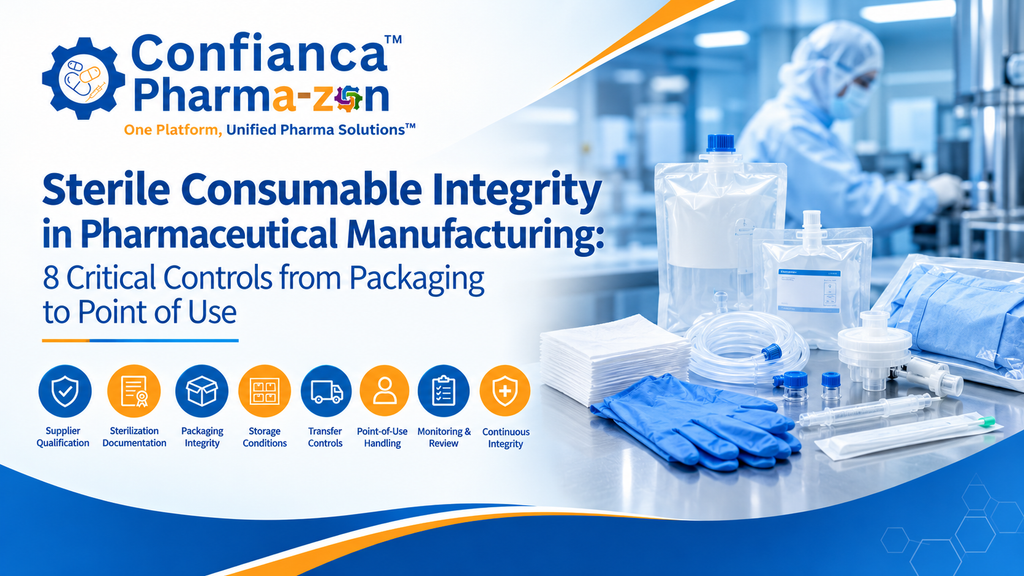
Sterile Consumable Integrity in Pharmaceutical Manufacturing: 8 Critical Controls from Packaging to Point of Use
Introduction
Sterile pharmaceutical manufacturing requires a carefully controlled environment where every material, component and operational activity can influence product quality.
From sterile wipes and gloves to tubing, filters, bags and other single-use components, pharmaceutical consumables play an important role in supporting aseptic processing operations.
However, purchasing a product labelled sterile does not automatically guarantee that its sterile condition will be maintained throughout its entire lifecycle.
Packaging damage, inappropriate storage, improper material transfer, handling errors and incorrect use can compromise the intended condition of sterile consumables.
Therefore, sterile consumables in pharmaceutical manufacturing should be managed through a systematic approach covering supplier qualification, packaging integrity, sterilization documentation, storage, transfer and point-of-use controls.
This article explains eight important controls that pharmaceutical manufacturers should consider when selecting and managing sterile consumables for controlled manufacturing environments.
1. Understanding the Role of Sterile Consumables
Sterile consumables are materials intended for use in operations where maintaining microbiological control is important.
Depending on the manufacturing activity, these may include:
- Sterile nitrile gloves.
- Sterile wipes.
- Sterile mops.
- Sterile tubing and connectors.
- Sterile filtration components.
- Sterile sampling accessories.
- Sterile bags and containers.
- Sterile transfer accessories.
- Sterile gowns and protective garments.
These materials support activities across pharmaceutical production, microbiology laboratories, cleanroom operations and aseptic processing environments.
The selection of each item should be based on its intended use, environmental classification, product-contact status and compatibility with the process.
2. Control One: Verify Supplier Qualification
Supplier qualification is an important starting point in sterile consumable management.
Manufacturers should evaluate whether suppliers can consistently provide products meeting defined technical and quality requirements.
Important supplier evaluation parameters include:
- Manufacturing facility information.
- Quality management system.
- Product specifications.
- Sterilization arrangements.
- Batch traceability.
- Packaging configuration.
- Change notification procedures.
- Complaint and deviation management.
Where applicable, supplier audits and quality agreements can provide additional assurance.
A supplier should be evaluated not only on price and availability but also on the ability to maintain consistent product quality.
3. Control Two: Review Sterilization Documentation
Sterile consumables may be sterilized using different validated processes depending on the material and product design.
Common approaches include:
Gamma irradiation
Gamma irradiation is used for suitable products and materials. Manufacturers should review applicable sterilization validation and release documentation.
Ethylene oxide sterilization
Ethylene oxide may be used for compatible materials and complex product configurations.
Residual ethylene oxide and related residues should be considered according to applicable requirements.
Moist heat sterilization
Moist heat sterilization is suitable for compatible materials and products that can withstand the required temperature and moisture exposure.
Other sterilization methods
Other validated methods may be appropriate depending on the consumable design and intended application.
For procurement and quality review, important records may include:
- Sterilization method.
- Batch or lot identification.
- Sterilization certificate.
- Sterility assurance information.
- Release documentation.
- Applicable expiry or retest information.
The required evidence should be established according to the manufacturer’s quality system and intended product use.
4. Control Three: Evaluate Packaging Integrity
Packaging is one of the most important protective barriers for sterile consumables.
Even when a product has undergone a validated sterilization process, damaged packaging may compromise its sterile condition.
Before acceptance and use, manufacturers should examine:
- Punctures and tears.
- Seal integrity.
- Moisture exposure.
- Damaged outer packaging.
- Missing identification labels.
- Incorrect packaging configuration.
- Evidence of tampering.
Where double or multiple packaging layers are used, the transfer procedure should specify how each layer is handled.
Packaging should be appropriate for the sterilization method and intended storage conditions.
5. Control Four: Establish Appropriate Storage Conditions
Sterile consumables should be stored according to the manufacturer’s instructions.
Important storage considerations include:
Temperature and humidity
Storage conditions should remain within the specified product limits.
Packaging protection
Products should be protected from mechanical damage, moisture and unnecessary handling.
Segregation
Sterile consumables should be appropriately segregated from non-sterile materials.
Stock rotation
FIFO or FEFO principles can support effective inventory management.
Expiry management
Expired products should not be issued for use unless a formally justified and approved procedure permits otherwise.
Storage records and periodic inspections help maintain inventory control.
6. Control Five: Manage Material Transfer into Cleanrooms
The transfer of consumables into controlled manufacturing areas requires careful planning.
Materials entering higher-grade environments should follow approved transfer and decontamination procedures.
A typical material transfer strategy may include:
- Receipt and inspection in the designated receiving area.
- Verification of product identity and packaging condition.
- Removal of external transport packaging where required.
- Cleaning or disinfection of appropriate packaging surfaces.
- Transfer through approved material pass boxes or airlocks.
- Removal of successive packaging layers according to the approved procedure.
- Introduction into the designated manufacturing area.
The exact process should be established according to facility design, environmental classification and contamination control strategy.
A poorly controlled transfer process can introduce contamination even when the original consumable is supplied sterile.
7. Control Six: Ensure Correct Handling at Point of Use
Correct handling is essential for maintaining the intended condition of sterile consumables.
Personnel should be trained in:
- Aseptic handling procedures.
- Proper glove donning techniques.
- Packaging opening procedures.
- Avoidance of unnecessary contact.
- Correct use of sterile wipes and mops.
- Disposal of used consumables.
- Prevention of cross-contamination.
Single-use consumables should not be reused unless the product is specifically designed and appropriately qualified for the intended reuse process.
Operators should inspect the packaging immediately before use and reject items showing signs of damage or compromised integrity.
8. Control Seven: Verify Material Compatibility
Not every sterile consumable is suitable for every pharmaceutical process.
Compatibility should be evaluated against the intended application.
Important considerations include:
Chemical compatibility
The material should be suitable for the chemicals and cleaning agents with which it may come into contact.
Physical compatibility
Temperature, pressure, mechanical stress and handling requirements should be considered.
Product-contact compatibility
For product-contact materials, manufacturers should assess relevant extractables and leachables risks according to the intended application.
Particle generation
Consumables used in cleanrooms and aseptic processing should be evaluated for potential particle shedding.
Microbiological suitability
Microbial control requirements should match the intended manufacturing environment.
Selecting materials solely because they are labelled sterile may overlook important process-related risks.
9. Control Eight: Maintain Traceability and Lifecycle Documentation
Traceability allows pharmaceutical manufacturers to establish which consumables were used in a particular process, batch or manufacturing activity.
A robust consumable management system may include:
- Product name and identification.
- Manufacturer and supplier.
- Batch or lot number.
- Sterilization documentation.
- Receipt and release records.
- Expiry information.
- Storage conditions.
- Issuance records.
- Point-of-use documentation, where required.
- Deviations and supplier complaints.
This information supports investigations when a quality issue is identified.
It also helps organizations manage supplier changes, recurring packaging problems and material-related contamination risks.
10. Common Mistakes in Sterile Consumable Management
Even well-established pharmaceutical facilities may encounter preventable consumable-related problems.
Common examples include:
Using damaged packaging: Packaging damage may compromise the protective barrier.
Ignoring expiry information: Consumables should be used within their specified shelf life and storage conditions.
Incomplete documentation: Missing sterilization or traceability records can complicate quality investigations.
Incorrect transfer procedures: Uncontrolled material movement can introduce contamination into cleanroom environments.
Poor compatibility assessment: Materials may generate particles or interact with process chemicals.
Inadequate personnel training: Incorrect handling can undermine otherwise appropriate material controls.
These issues should be addressed through documented procedures, training, supplier management and periodic review.
11. How Confianca Pharmazon Supports Sterile Consumable Requirements
Confianca Pharmazon provides pharmaceutical consumables and related supplies to support quality control, microbiology and pharmaceutical manufacturing requirements.
Our product portfolio includes a range of pharmaceutical and cleanroom-related consumables.
Product requirements may include:
- Sterile and non-sterile gloves.
- Sterile wipes.
- QC and microbiology supplies.
- Filtration-related consumables.
- Sterile bags and other accessories.
- Pharmaceutical manufacturing consumables.
- Additional products based on customer requirements.
Product selection should always consider intended use, applicable specifications, sterility requirements and supporting documentation.
Our objective is to support pharmaceutical procurement and quality teams with appropriate consumable solutions for their operational requirements.
Frequently Asked Questions
1. What are sterile consumables in pharmaceutical manufacturing?
They are products supplied in a sterile condition for intended use in pharmaceutical operations where microbiological contamination control is important.
2. What documents should be requested when purchasing sterile consumables?
Depending on the product, manufacturers may request specifications, sterilization certificates, batch traceability, sterility assurance information and expiry details.
3. Can sterile consumables be used after their expiry date?
They should not be used beyond their stated expiry date unless an applicable, formally approved and scientifically justified process permits it.
4. Why is packaging integrity important?
Packaging helps maintain the product’s intended protective condition after sterilization. Damage can compromise that protection.
5. How should sterile consumables be transferred into cleanrooms?
They should follow approved material transfer, cleaning, disinfection and packaging removal procedures appropriate to the facility and intended environment.
6. Are all sterile gloves suitable for pharmaceutical cleanrooms?
No. Selection should consider sterility, cleanliness, particle shedding, chemical compatibility, packaging and the intended environmental classification.
7. What is the difference between sterile and cleanroom-compatible consumables?
Sterility addresses the microbiological condition of the product, while cleanroom compatibility also considers factors such as particulate shedding, chemical residues and material suitability.
Conclusion
Sterile consumables are an essential part of pharmaceutical manufacturing, but maintaining their intended condition requires more than purchasing products with a sterile label.
From supplier qualification and sterilization documentation to packaging integrity, storage, material transfer and point-of-use handling, each stage contributes to an effective consumable control strategy.
A systematic approach to sterile consumables in pharmaceutical manufacturing helps organizations strengthen contamination prevention, improve traceability and support reliable aseptic operations.
Confianca Pharmazon aims to support pharmaceutical manufacturers with a range of pharmaceutical consumables and supply solutions aligned with their operational requirements.
Looking for pharmaceutical sterile consumables, QC supplies or cleanroom products? Contact Confianca Pharmazon today.
Website: https://confiancapharmazon.com/
Sterile Consumable Integrity in Pharmaceutical Manufacturing: 8 Critical Controls from Packaging to Point of Use
Introduction
Sterile pharmaceutical manufacturing requires a carefully controlled environment where every material, component and operational activity can influence product quality.
From sterile wipes and gloves to tubing, filters, bags and other single-use components, pharmaceutical consumables play an important role in supporting aseptic processing operations.
However, purchasing a product labelled sterile does not automatically guarantee that its sterile condition will be maintained throughout its entire lifecycle.
Packaging damage, inappropriate storage, improper material transfer, handling errors and incorrect use can compromise the intended condition of sterile consumables.
Therefore, sterile consumables in pharmaceutical manufacturing should be managed through a systematic approach covering supplier qualification, packaging integrity, sterilization documentation, storage, transfer and point-of-use controls.
This article explains eight important controls that pharmaceutical manufacturers should consider when selecting and managing sterile consumables for controlled manufacturing environments.
1. Understanding the Role of Sterile Consumables
Sterile consumables are materials intended for use in operations where maintaining microbiological control is important.
Depending on the manufacturing activity, these may include:
- Sterile nitrile gloves.
- Sterile wipes.
- Sterile mops.
- Sterile tubing and connectors.
- Sterile filtration components.
- Sterile sampling accessories.
- Sterile bags and containers.
- Sterile transfer accessories.
- Sterile gowns and protective garments.
These materials support activities across pharmaceutical production, microbiology laboratories, cleanroom operations and aseptic processing environments.
The selection of each item should be based on its intended use, environmental classification, product-contact status and compatibility with the process.
2. Control One: Verify Supplier Qualification
Supplier qualification is an important starting point in sterile consumable management.
Manufacturers should evaluate whether suppliers can consistently provide products meeting defined technical and quality requirements.
Important supplier evaluation parameters include:
- Manufacturing facility information.
- Quality management system.
- Product specifications.
- Sterilization arrangements.
- Batch traceability.
- Packaging configuration.
- Change notification procedures.
- Complaint and deviation management.
Where applicable, supplier audits and quality agreements can provide additional assurance.
A supplier should be evaluated not only on price and availability but also on the ability to maintain consistent product quality.
3. Control Two: Review Sterilization Documentation
Sterile consumables may be sterilized using different validated processes depending on the material and product design.
Common approaches include:
Gamma irradiation
Gamma irradiation is used for suitable products and materials. Manufacturers should review applicable sterilization validation and release documentation.
Ethylene oxide sterilization
Ethylene oxide may be used for compatible materials and complex product configurations.
Residual ethylene oxide and related residues should be considered according to applicable requirements.
Moist heat sterilization
Moist heat sterilization is suitable for compatible materials and products that can withstand the required temperature and moisture exposure.
Other sterilization methods
Other validated methods may be appropriate depending on the consumable design and intended application.
For procurement and quality review, important records may include:
- Sterilization method.
- Batch or lot identification.
- Sterilization certificate.
- Sterility assurance information.
- Release documentation.
- Applicable expiry or retest information.
The required evidence should be established according to the manufacturer’s quality system and intended product use.
4. Control Three: Evaluate Packaging Integrity
Packaging is one of the most important protective barriers for sterile consumables.
Even when a product has undergone a validated sterilization process, damaged packaging may compromise its sterile condition.
Before acceptance and use, manufacturers should examine:
- Punctures and tears.
- Seal integrity.
- Moisture exposure.
- Damaged outer packaging.
- Missing identification labels.
- Incorrect packaging configuration.
- Evidence of tampering.
Where double or multiple packaging layers are used, the transfer procedure should specify how each layer is handled.
Packaging should be appropriate for the sterilization method and intended storage conditions.
5. Control Four: Establish Appropriate Storage Conditions
Sterile consumables should be stored according to the manufacturer’s instructions.
Important storage considerations include:
Temperature and humidity
Storage conditions should remain within the specified product limits.
Packaging protection
Products should be protected from mechanical damage, moisture and unnecessary handling.
Segregation
Sterile consumables should be appropriately segregated from non-sterile materials.
Stock rotation
FIFO or FEFO principles can support effective inventory management.
Expiry management
Expired products should not be issued for use unless a formally justified and approved procedure permits otherwise.
Storage records and periodic inspections help maintain inventory control.
6. Control Five: Manage Material Transfer into Cleanrooms
The transfer of consumables into controlled manufacturing areas requires careful planning.
Materials entering higher-grade environments should follow approved transfer and decontamination procedures.
A typical material transfer strategy may include:
- Receipt and inspection in the designated receiving area.
- Verification of product identity and packaging condition.
- Removal of external transport packaging where required.
- Cleaning or disinfection of appropriate packaging surfaces.
- Transfer through approved material pass boxes or airlocks.
- Removal of successive packaging layers according to the approved procedure.
- Introduction into the designated manufacturing area.
The exact process should be established according to facility design, environmental classification and contamination control strategy.
A poorly controlled transfer process can introduce contamination even when the original consumable is supplied sterile.
7. Control Six: Ensure Correct Handling at Point of Use
Correct handling is essential for maintaining the intended condition of sterile consumables.
Personnel should be trained in:
- Aseptic handling procedures.
- Proper glove donning techniques.
- Packaging opening procedures.
- Avoidance of unnecessary contact.
- Correct use of sterile wipes and mops.
- Disposal of used consumables.
- Prevention of cross-contamination.
Single-use consumables should not be reused unless the product is specifically designed and appropriately qualified for the intended reuse process.
Operators should inspect the packaging immediately before use and reject items showing signs of damage or compromised integrity.
8. Control Seven: Verify Material Compatibility
Not every sterile consumable is suitable for every pharmaceutical process.
Compatibility should be evaluated against the intended application.
Important considerations include:
Chemical compatibility
The material should be suitable for the chemicals and cleaning agents with which it may come into contact.
Physical compatibility
Temperature, pressure, mechanical stress and handling requirements should be considered.
Product-contact compatibility
For product-contact materials, manufacturers should assess relevant extractables and leachables risks according to the intended application.
Particle generation
Consumables used in cleanrooms and aseptic processing should be evaluated for potential particle shedding.
Microbiological suitability
Microbial control requirements should match the intended manufacturing environment.
Selecting materials solely because they are labelled sterile may overlook important process-related risks.
9. Control Eight: Maintain Traceability and Lifecycle Documentation
Traceability allows pharmaceutical manufacturers to establish which consumables were used in a particular process, batch or manufacturing activity.
A robust consumable management system may include:
- Product name and identification.
- Manufacturer and supplier.
- Batch or lot number.
- Sterilization documentation.
- Receipt and release records.
- Expiry information.
- Storage conditions.
- Issuance records.
- Point-of-use documentation, where required.
- Deviations and supplier complaints.
This information supports investigations when a quality issue is identified.
It also helps organizations manage supplier changes, recurring packaging problems and material-related contamination risks.
10. Common Mistakes in Sterile Consumable Management
Even well-established pharmaceutical facilities may encounter preventable consumable-related problems.
Common examples include:
Using damaged packaging: Packaging damage may compromise the protective barrier.
Ignoring expiry information: Consumables should be used within their specified shelf life and storage conditions.
Incomplete documentation: Missing sterilization or traceability records can complicate quality investigations.
Incorrect transfer procedures: Uncontrolled material movement can introduce contamination into cleanroom environments.
Poor compatibility assessment: Materials may generate particles or interact with process chemicals.
Inadequate personnel training: Incorrect handling can undermine otherwise appropriate material controls.
These issues should be addressed through documented procedures, training, supplier management and periodic review.
11. How Confianca Pharmazon Supports Sterile Consumable Requirements
Confianca Pharmazon provides pharmaceutical consumables and related supplies to support quality control, microbiology and pharmaceutical manufacturing requirements.
Our product portfolio includes a range of pharmaceutical and cleanroom-related consumables.
Product requirements may include:
- Sterile and non-sterile gloves.
- Sterile wipes.
- QC and microbiology supplies.
- Filtration-related consumables.
- Sterile bags and other accessories.
- Pharmaceutical manufacturing consumables.
- Additional products based on customer requirements.
Product selection should always consider intended use, applicable specifications, sterility requirements and supporting documentation.
Our objective is to support pharmaceutical procurement and quality teams with appropriate consumable solutions for their operational requirements.
Frequently Asked Questions
1. What are sterile consumables in pharmaceutical manufacturing?
They are products supplied in a sterile condition for intended use in pharmaceutical operations where microbiological contamination control is important.
2. What documents should be requested when purchasing sterile consumables?
Depending on the product, manufacturers may request specifications, sterilization certificates, batch traceability, sterility assurance information and expiry details.
3. Can sterile consumables be used after their expiry date?
They should not be used beyond their stated expiry date unless an applicable, formally approved and scientifically justified process permits it.
4. Why is packaging integrity important?
Packaging helps maintain the product’s intended protective condition after sterilization. Damage can compromise that protection.
5. How should sterile consumables be transferred into cleanrooms?
They should follow approved material transfer, cleaning, disinfection and packaging removal procedures appropriate to the facility and intended environment.
6. Are all sterile gloves suitable for pharmaceutical cleanrooms?
No. Selection should consider sterility, cleanliness, particle shedding, chemical compatibility, packaging and the intended environmental classification.
7. What is the difference between sterile and cleanroom-compatible consumables?
Sterility addresses the microbiological condition of the product, while cleanroom compatibility also considers factors such as particulate shedding, chemical residues and material suitability.
Conclusion
Sterile consumables are an essential part of pharmaceutical manufacturing, but maintaining their intended condition requires more than purchasing products with a sterile label.
From supplier qualification and sterilization documentation to packaging integrity, storage, material transfer and point-of-use handling, each stage contributes to an effective consumable control strategy.
A systematic approach to sterile consumables in pharmaceutical manufacturing helps organizations strengthen contamination prevention, improve traceability and support reliable aseptic operations.
Confianca Pharmazon aims to support pharmaceutical manufacturers with a range of pharmaceutical consumables and supply solutions aligned with their operational requirements.
Looking for pharmaceutical sterile consumables, QC supplies or cleanroom products? Contact Confianca Pharmazon today.