No products in the cart.
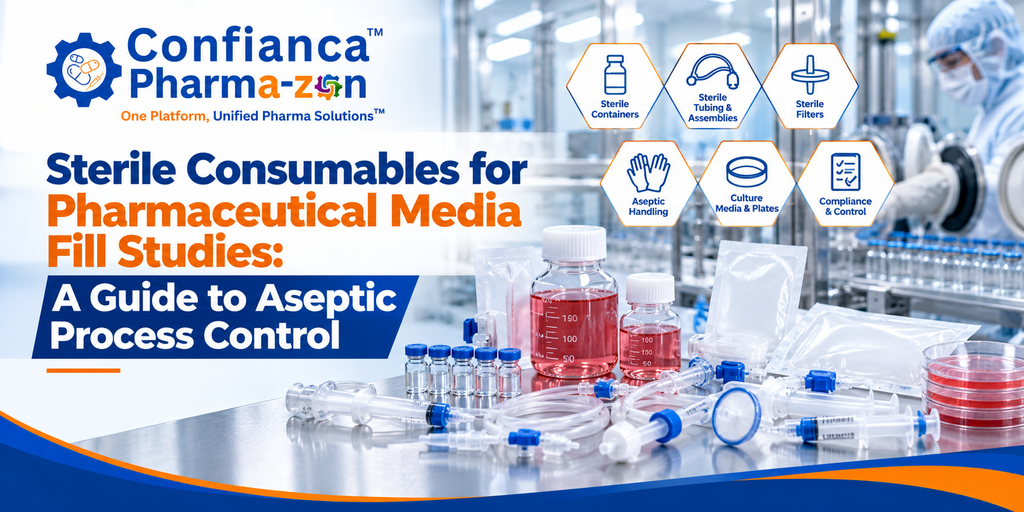
Sterile Consumables for Pharmaceutical Media Fill Studies: A Guide to Aseptic Process Control
Introduction
In pharmaceutical manufacturing, maintaining aseptic conditions is essential for protecting product quality and minimizing the risk of microbial contamination. Every stage of an aseptic operation requires careful planning, appropriate materials, trained personnel, and well-established procedures. Among these essential elements, sterile consumables for pharmaceutical media fill studies play an important role in supporting controlled and consistent aseptic process simulation.
A media fill, also known as an aseptic process simulation, is designed to evaluate the ability of an aseptic manufacturing process to operate under defined conditions without introducing unacceptable microbiological contamination. Instead of using the actual pharmaceutical product, a suitable microbiological growth medium is used to simulate relevant manufacturing activities. The resulting units are evaluated according to an approved protocol.
Sterile consumables used during these activities must be suitable for their intended applications and handled according to established procedures. Their condition, compatibility, packaging integrity, and traceability are important considerations when preparing and executing a media fill study.
For pharmaceutical manufacturers, quality assurance professionals, microbiology laboratories, and validation teams, understanding the role of sterile consumables in aseptic process simulation can support better preparation, more consistent execution, and effective quality documentation.
1. Understanding Pharmaceutical Media Fill Studies
A pharmaceutical media fill study is an important component of an aseptic process simulation program. It evaluates the performance of the process under defined operating conditions, including relevant equipment operations, personnel activities, and interventions.
The scope of a media fill depends on the manufacturing process and the approved study protocol. Typical activities may include:
- Preparation and setup of filling equipment.
- Assembly of designated product-contact components.
- Introduction and handling of materials within controlled areas.
- Simulated filling and container handling.
- Performance of specified routine and non-routine interventions.
- Closure, identification, incubation, and evaluation of filled units.
These activities are designed to represent relevant aspects of the actual aseptic operation.
Sterile consumables support the execution of these activities, but their use alone does not guarantee a successful media fill. The outcome also depends on facility controls, equipment suitability, personnel qualification, environmental conditions, operating procedures, and the overall contamination control strategy.
2. The Role of Sterile Consumables in Aseptic Process Simulation
Sterile consumables are materials and accessories supplied or prepared for use in applications requiring an appropriate level of microbiological control. In pharmaceutical manufacturing, their suitability depends on the intended use, applicable specifications, and requirements of the process.
During media fill studies, relevant consumables may support material transfer, equipment assembly, handling operations, and specified interventions.
Examples can include:
- Sterile gloves and designated protective items.
- Sterile tubing and compatible connectors.
- Sterile bags and containers for appropriate applications.
- Sterile handling tools and accessories.
- Sterile wipes intended for specified cleaning activities.
- Single-use product-contact components.
- Suitable containers and closures used during simulated filling.
The exact requirements vary between manufacturing facilities and study designs. Each item should be selected according to the relevant process requirements rather than simply because it is labelled sterile.
Why suitability matters
A consumable may meet a sterility requirement but still be unsuitable for a particular application. Dimensional compatibility, material properties, connection design, chemical compatibility, and the intended operating conditions may also need to be considered.
Selecting suitable consumables helps ensure that materials used during the simulation are consistent with the equipment configuration and approved process.
3. Consumable Preparation Before a Media Fill Study
Preparation is a critical step in ensuring that an aseptic process simulation can be performed according to its approved protocol.
Before the study begins, the responsible team should identify the required consumables, verify their availability, and confirm that they meet the applicable acceptance requirements.
Developing a process-specific checklist
A consumable checklist should reflect the manufacturing operation being simulated. It should identify the materials needed for equipment setup, material handling, interventions, and other planned activities.
A clearly defined checklist can help teams avoid missing items, unplanned substitutions, and unnecessary interruptions during execution.
Verifying packaging integrity
Packaging inspection is important because damaged packaging may compromise the assurance associated with a sterile item.
Depending on the consumable and the site’s procedures, checks may include:
- Product identity and specification.
- Packaging condition and seal integrity.
- Applicable expiry or use-by date.
- Required sterility status.
- Batch or lot identification, where applicable.
- Suitability for the intended application.
Any damaged, expired, or questionable material should be managed according to the facility’s established procedures.
Confirming availability and quantities
The team should ensure that the required materials are available in sufficient quantities for the planned activities.
Adequate preparation helps reduce unnecessary interruptions and minimizes the risk of introducing unapproved alternatives during the study.
4. Maintaining Material Integrity During Transfer and Handling
The transfer of consumables into controlled manufacturing areas requires a defined approach. Materials may pass through different environmental zones, and their packaging can be exposed to surfaces or handling practices that require control.
The facility’s material-transfer procedures should specify how consumables are prepared, transferred, unpacked, and introduced into the designated area.
Controlled packaging removal
Where a consumable has multiple packaging layers, each layer should be handled according to the approved procedure.
Personnel should understand which packaging may be removed at each stage and how to prevent contamination of the item during transfer. Unnecessary contact with critical surfaces should be avoided.
Appropriate storage and staging
Consumables should be placed in designated locations and stored under the conditions specified for the particular item.
Storage arrangements should help protect packaging integrity, maintain identification, and prevent confusion between accepted, unused, opened, and rejected materials.
Consistent handling practices
Personnel should follow approved handling techniques throughout the activity. Unnecessary movement, uncontrolled placement, and repeated handling can introduce avoidable contamination risks.
Consistent practices help preserve material integrity and support the conditions being evaluated during the media fill.
5. Sterile Consumables During Equipment Setup and Interventions
Equipment preparation and interventions are important parts of many aseptic process simulations. Consumables used during these activities should be appropriate for the intended operation and compatible with the equipment.
Transfer tubing and connectors
Where the process uses single-use tubing or transfer assemblies, the components should meet the required specifications and be compatible with the equipment configuration.
Before use, personnel should verify the required components, inspect them for visible damage, and follow approved assembly instructions.
Incorrect connections, unsuitable materials, or deviations from the intended configuration can introduce operational uncertainty and may affect the representativeness of the simulation.
Handling accessories
Forceps and other designated handling accessories may be needed for specific activities. Their suitability depends on the task, the surfaces involved, and the relevant procedure.
Personnel should use approved accessories and follow the specified handling method rather than choosing an alternative solely because it is available.
Planned and unplanned interventions
Interventions performed during media fill should follow the approved study protocol. Consumables needed for planned interventions should be identified before execution.
If an unexpected situation requires a material replacement or process adjustment, the responsible personnel should follow the established escalation, deviation, or change-control procedure.
Unapproved substitutions should not be introduced without an appropriate assessment.
6. Documentation and Traceability of Sterile Consumables
Documentation helps establish which materials were used, whether the required checks were completed, and whether the study was executed according to the approved requirements.
Traceability is particularly useful when reviewing unexpected results or investigating a potential material-related issue.
Recording material identification
Where required, records may include the consumable name, product code, batch or lot number, expiry date, supplier information, and other relevant identification details.
The level of traceability should be appropriate to the item’s role and the facility’s quality procedures.
Maintaining accurate records
Documentation should reflect the materials actually used during the simulation. Any approved substitution, unexpected event, or deviation should be recorded in accordance with the site’s procedures.
Accurate records help quality assurance teams reconstruct the sequence of events and determine whether a material-related factor could have influenced the study.
Supporting quality assurance review
Consumable records may be reviewed alongside equipment documentation, personnel records, environmental monitoring results, intervention logs, and microbiological findings.
Together, these records provide a more complete picture of how the study was conducted and whether any event requires further investigation.
7. Managing Consumable-Related Risks
Sterile consumables should be considered as part of the facility’s broader contamination control strategy. Potential risks depend on the item’s intended use, its condition, the location of the operation, and the consequences of a failure.
Packaging damage or compromised seals
Damaged packaging can undermine confidence in the item’s condition. Affected materials should be handled according to the applicable rejection, quarantine, or escalation procedure.
Personnel should not assume that an item remains suitable when its packaging integrity is uncertain.
Incorrect consumable selection
Using an item that does not meet the specified requirements can create compatibility problems or affect the intended operation.
Approved material specifications, clear identification, and pre-use verification help reduce this risk.
Unexpected visible particles
Unexpected visible particles associated with a consumable should be assessed according to the facility’s established procedures.
The assessment may consider the material involved, packaging condition, point of observation, potential contact with critical surfaces, and other relevant process information.
The source should not be assumed without supporting evidence. Where appropriate, an investigation may require additional inspection or analytical evaluation.
Incomplete documentation
Missing or inconsistent records can make it difficult to establish which materials were used and whether they met the required specifications.
Reviewing documentation before and after execution helps identify gaps and supports effective quality oversight.
8. What to Do When a Media Fill Study Produces Unexpected Results
A media fill study must be evaluated against its approved protocol and applicable acceptance criteria.
If contaminated units or other unexpected findings occur, the facility should initiate the appropriate investigation. The investigation should examine plausible causes rather than automatically attributing the result to a sterile consumable.
Relevant information may include:
- Consumable identity and batch or lot details.
- Packaging and material-transfer records.
- Equipment assembly and setup documentation.
- Personnel activities and intervention records.
- Environmental monitoring data.
- Microbiological findings.
- Deviations and unusual events recorded during execution.
If evidence suggests that a consumable contributed to the outcome, the investigation should assess the mechanism and significance of that contribution.
Corrective and preventive actions should address identified causes. Decisions about the validity of the study, any necessary repeat simulation, and additional controls should be made through the established quality system.
9. Best Practices for Improving Media Fill Readiness
A structured consumable management process can help pharmaceutical facilities prepare for aseptic process simulation more efficiently.
1. Establish a documented consumable list. Identify the materials required for the study and align the list with the approved protocol.
2. Verify materials before execution. Confirm that the required items are available, correctly identified, within their applicable expiry dates, and in acceptable packaging condition.
3. Use approved specifications. Ensure that consumables meet the requirements for their intended application and equipment configuration.
4. Standardize handling procedures. Provide appropriate instructions and training for packaging removal, material transfer, assembly, and replacement.
5. Maintain traceability. Record the relevant material identification and usage information according to the facility’s procedures.
6. Manage changes through established controls. Assess substitutions and unexpected changes before implementation, where required.
7. Review documentation systematically. Ensure that relevant records are complete and consistent with the actual activities performed.
These practices support more predictable execution and strengthen the quality documentation associated with media fill studies.
10. Selecting Sterile Consumables for Pharmaceutical Manufacturing
Selecting sterile consumables requires consideration of the complete application rather than relying on a single product characteristic.
Pharmaceutical manufacturers should evaluate factors such as:
- Intended use and process requirements.
- Compatibility with equipment and connected components.
- Applicable sterility and cleanliness requirements.
- Material properties and relevant operating conditions.
- Packaging configuration and integrity.
- Supplier documentation and traceability.
- Storage conditions and shelf-life requirements.
- Internal quality and regulatory expectations.
The selection process should be supported by the facility’s established procurement, qualification, and quality assurance procedures.
For critical applications, the suitability of a consumable should be confirmed through the appropriate documented assessment before it is introduced into the process.
11. How Confianca Pharmazon Supports Pharmaceutical Quality Operations
Pharmaceutical and biopharmaceutical organizations require appropriate consumables and reliable supply arrangements to support manufacturing and laboratory activities.
Confianca Pharmazon serves the pharmaceutical and biopharmaceutical sectors with product and service offerings relevant to pharmaceutical quality operations, including sterile consumables and microbiology laboratory consumables.
For organizations evaluating materials for aseptic process simulation, requirements should be defined according to the intended application, relevant specifications, and established quality procedures.
A systematic approach to material selection, handling, and traceability helps production, validation, microbiology, procurement, and quality assurance teams coordinate their requirements.
To explore relevant product categories and services, visit the official website: https://confiancapharmazon.com/
Frequently Asked Questions
What are sterile consumables in pharmaceutical manufacturing?
Sterile consumables are materials and accessories intended for applications requiring an appropriate level of microbiological control. Their suitability depends on their specifications, intended use, handling, and applicable process requirements.
Why are sterile consumables important in pharmaceutical media fill studies?
They support the activities represented in an aseptic process simulation, including equipment setup, material handling, and specified interventions. Appropriate selection and handling help maintain consistency with the approved study protocol.
Do sterile consumables guarantee a successful media fill?
No. A successful media fill depends on the performance of the overall aseptic process and the study’s acceptance criteria. Consumables are one component of the wider contamination control system.
What should be checked before using a sterile consumable?
Relevant checks may include product identity, packaging integrity, expiry, required sterility status, and suitability for the intended application. The exact checks should follow the site’s approved procedures.
Why is consumable traceability important?
Traceability helps identify which materials were used and supports investigations into deviations, unexpected findings, and potential material-related issues.
Can a sterile consumable be substituted during a media fill?
A substitution should be assessed and approved according to the applicable procedures before implementation. A similar appearance or general sterility claim does not establish that an alternative is suitable.
What should happen if unexpected contamination is detected?
The facility should follow its established investigation process, examine relevant evidence, identify the likely cause where possible, and implement appropriate corrective and preventive actions.
Conclusion
Sterile consumables for pharmaceutical media fill studies are an important consideration in the preparation and execution of aseptic process simulations. Their contribution extends beyond sterility status to include suitability, compatibility, packaging integrity, controlled handling, and traceability.
When these factors are integrated into a documented quality system, pharmaceutical manufacturers can improve operational consistency, support effective investigations, and strengthen their approach to contamination control.
A well-planned consumable management process works alongside qualified personnel, appropriate facilities, suitable equipment, and approved operating procedures to support reliable aseptic process simulation.
Confianca Pharmazon — Supporting pharmaceutical and biopharmaceutical quality operations through relevant consumable solutions.