
No products in the cart.
Understanding Particle Morphology in Pharmaceutical Analysis: How Shape, Surface Features and Microscopy Improve Contamination Assessment
Introduction
In pharmaceutical manufacturing, identifying an unexpected particle is only one part of a successful contamination investigation. Understanding its physical characteristics, morphology, surface structure, and possible origin can provide valuable information for quality assurance and manufacturing teams.
Two particles may have similar elemental compositions but completely different physical appearances and potential sources. For example, a metallic particle generated through equipment wear may appear angular and irregular, whereas a fiber introduced through packaging or manufacturing materials may exhibit an elongated structure.
This is why particle morphology in pharmaceutical analysis is an important part of a comprehensive particle characterization strategy.
Particle morphology refers to the physical appearance and structural characteristics of a particle, including its shape, size, surface texture, edges, and dimensional features. These characteristics help analytical specialists distinguish between different particle types and develop more informed contamination investigation hypotheses.
For pharmaceutical manufacturers producing injectables, biologics, sterile formulations, and other critical medicines, understanding particle morphology can strengthen contamination assessment and support scientifically defensible quality decisions.
1. What Is Particle Morphology in Pharmaceutical Characterization?
Particle morphology describes the external physical structure of an individual particle.
Unlike elemental analysis, which determines the chemical elements present in a sample, morphological examination focuses on how the particle looks and how its physical structure is organized.
Important morphological characteristics include:
- Shape and geometry
- Particle length and width
- Surface texture
- Edge characteristics
- Surface irregularities
- Agglomeration or clustering
- Transparency and opacity
- Fracture patterns
For example, a particle may be classified as spherical, fibrous, flaky, crystalline, granular, or irregular.
These observations provide useful preliminary information before selecting advanced analytical techniques.
2. Why Morphological Examination Matters in Pharmaceutical Manufacturing
Unexpected particulate matter can originate from multiple manufacturing sources.
Common possibilities include:
- Stainless steel manufacturing equipment
- Elastomeric components and seals
- Glass containers and ampoules
- Plastic components and packaging
- Fibrous materials
- Environmental contamination
- Raw materials and formulation ingredients
Morphological examination helps investigators identify similarities between an unknown particle and potential source materials.
For example, an elongated particle with a consistent fibrous structure may justify investigating textile, filter, wipe, or packaging-related sources.
Similarly, an angular particle with fracture-like edges may justify investigating glass, crystalline material, or mechanically generated fragments.
However, morphology alone cannot establish a definitive source. It should be interpreted alongside elemental composition, chemical identification, manufacturing history, and other relevant evidence.
3. Major Types of Particle Morphology
Understanding common particle shapes is important when evaluating contamination in pharmaceutical products.
A. Spherical particles
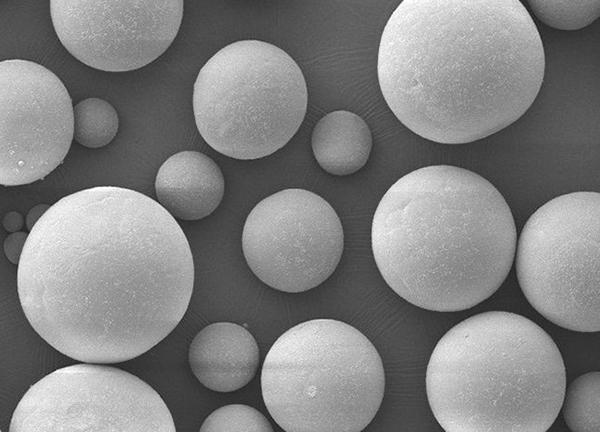
Spherical particles have rounded external structures and may originate from droplets, manufacturing processes, polymer materials, or other sources.
Their identification requires consideration of material composition and process context.
B. Fibrous particles
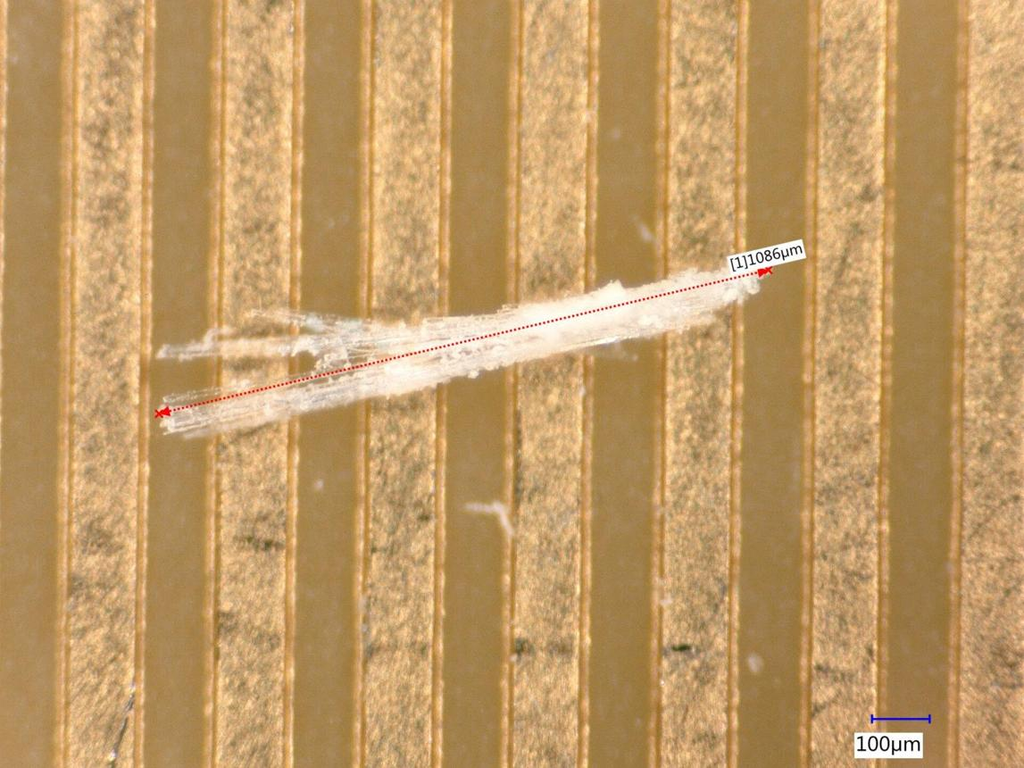
Fibrous particles are typically elongated and may have variable diameters and surface characteristics.
Potential sources include wipes, textiles, filters, packaging materials, and environmental contamination.
C. Angular particles
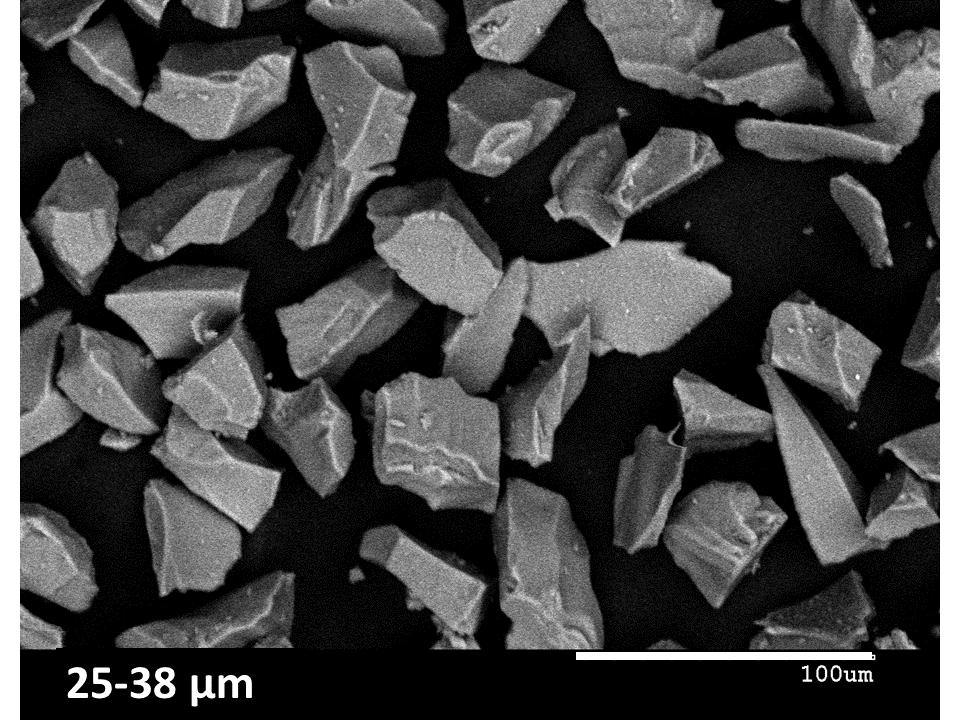
Angular particles may exhibit sharp edges, irregular boundaries, and fracture-like surfaces.
They can justify investigation of glass breakage, mechanical wear, or fragmented materials.
D. Flake-like particles
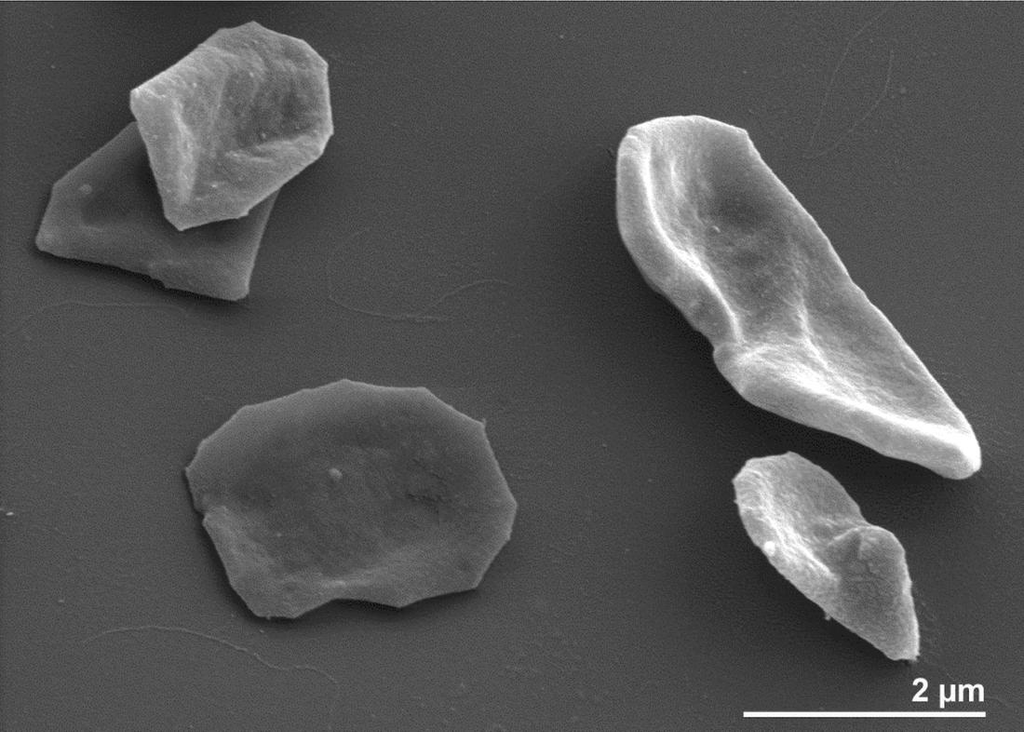
Flake-like particles have relatively thin structures and broad surface areas compared with their thickness.
They may be associated with coatings, material degradation, or surface abrasion.
E. Agglomerated particles
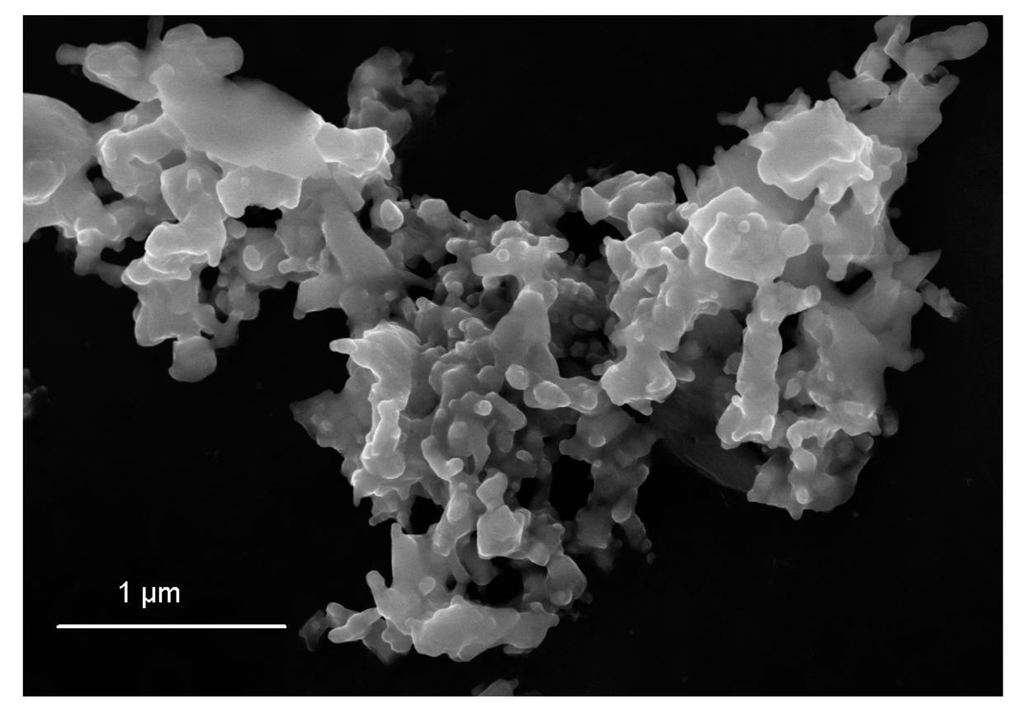
Agglomerates consist of multiple particles attached or associated with one another.
Understanding whether an observed structure represents an individual particle or an agglomeration can be important for interpreting analytical results.
4. Role of Optical Microscopy in Particle Morphology Analysis
Optical microscopy is frequently used as an initial examination technique in pharmaceutical particle investigations.
It allows analysts to observe:
- General particle appearance
- Relative dimensions
- Transparency and colour
- Surface irregularities
- Particle distribution
- Aggregation characteristics
Microscopic examination can also help analysts select representative particles for advanced testing.
A properly documented microscopic examination should include suitable images, magnification information, measurement details, and sample identification.
Optical microscopy does have limitations. Very small particles, complex surface structures, and materials with similar optical appearances may require additional analytical techniques.
5. How SEM Improves Particle Morphology Assessment
Scanning Electron Microscopy (SEM) provides detailed information about particle surface characteristics and physical structure.
Compared with conventional optical microscopy, SEM can reveal finer surface features and structural irregularities.
SEM examination can help assess:
- Surface roughness.
- Particle fracture patterns.
- Fine structural features.
- Particle agglomeration.
- Surface deposits.
- Morphological differences between particles.
When combined with Energy Dispersive X-ray Spectroscopy (EDS), SEM can also provide elemental information.
This combination is particularly valuable when investigating unknown foreign particles in pharmaceutical products.
However, SEM-EDS elemental results should not automatically be interpreted as definitive molecular or compound identification.
6. Combining Morphology with Elemental and Chemical Analysis
A reliable pharmaceutical particle characterization investigation should integrate multiple types of analytical evidence.
| Analytical technique | Primary information |
|---|---|
| Optical microscopy | Appearance, shape and dimensions |
| SEM | Surface morphology and structural details |
| EDS | Elemental composition |
| FTIR | Molecular information for suitable materials |
| Raman spectroscopy | Molecular and structural information for suitable materials |
For example, an unknown particle may exhibit an irregular, angular morphology under microscopy.
SEM examination may provide additional surface details, while EDS may indicate the presence of iron, chromium, and nickel.
These findings could justify investigating stainless steel-related sources. However, the conclusion should also consider the manufacturing equipment, material specifications, and other potential sources.
The strength of an investigation comes from combining evidence rather than relying on one observation.
7. Common Challenges in Morphological Particle Assessment
Pharmaceutical laboratories may encounter several challenges:
Similar appearances: Different materials can have similar shapes and surface characteristics.
Particle damage: Handling and recovery procedures may alter fragile particles.
Small particle dimensions: Very small particles may require advanced microscopy.
Agglomeration: Multiple particles may appear as a single structure.
Limited reference materials: Investigators may not always have representative comparison samples.
Interpretation uncertainty: Morphological observations alone may not establish particle identity.
These challenges highlight the importance of a structured analytical investigation.
8. Documentation and Reporting of Morphological Findings
A particle characterization report should communicate the findings clearly and objectively.
Important reporting elements include:
- Sample identification and traceability
- Particle identification number
- Microscopic images
- Magnification information
- Measured particle dimensions
- Morphological observations
- Analytical technique used
- Elemental or chemical findings, where applicable
- Analytical limitations
- Interpretation and conclusion
Separating direct observations from interpretations is especially important.
For example, reporting that a particle has an elongated morphology is an observation. Suggesting that it may be consistent with a fibrous manufacturing material is an interpretation requiring supporting evidence.
9. How Pharmaceutical Manufacturers Can Strengthen Particle Characterization Programs
Manufacturers can improve analytical investigations through a structured approach.
- Establish standardized particle documentation procedures.
- Maintain appropriate reference materials.
- Use suitable microscopy techniques.
- Select analytical methods based on the nature of the particle.
- Maintain sample traceability.
- Compare analytical findings with manufacturing records.
- Document uncertainty and analytical limitations.
- Link investigation findings to appropriate CAPA activities.
A well-designed particle characterization program helps organizations move beyond simply identifying an unknown particle and toward understanding its possible origin and quality significance.
10. How Confianca Pharmazon Supports Pharmaceutical Particle Characterization
Confianca Pharmazon supports pharmaceutical manufacturers through specialized particle characterization services and pharmaceutical quality solutions.
Our particle characterization approach focuses on examining unknown particles through suitable microscopic and analytical techniques to generate meaningful technical information for contamination investigations.
Depending on sample characteristics and analytical requirements, particle characterization may involve microscopy, SEM-EDS, elemental assessment, and other appropriate analytical methods.
Our objective is to help pharmaceutical quality teams understand particle characteristics, evaluate possible contamination sources, and develop technically supported investigation conclusions.
Conclusion
Particle morphology is an important component of pharmaceutical particle characterization because physical appearance can provide valuable clues about particle structure and possible origin.
However, morphology should never be treated as independent proof of material identity or contamination source.
Combining optical microscopy, SEM, EDS, FTIR, and relevant manufacturing information provides a more comprehensive approach to pharmaceutical contamination assessment.
For pharmaceutical manufacturers, a scientifically structured particle characterization program supports better investigation quality, improved documentation, and more informed quality decisions.