No products in the cart.
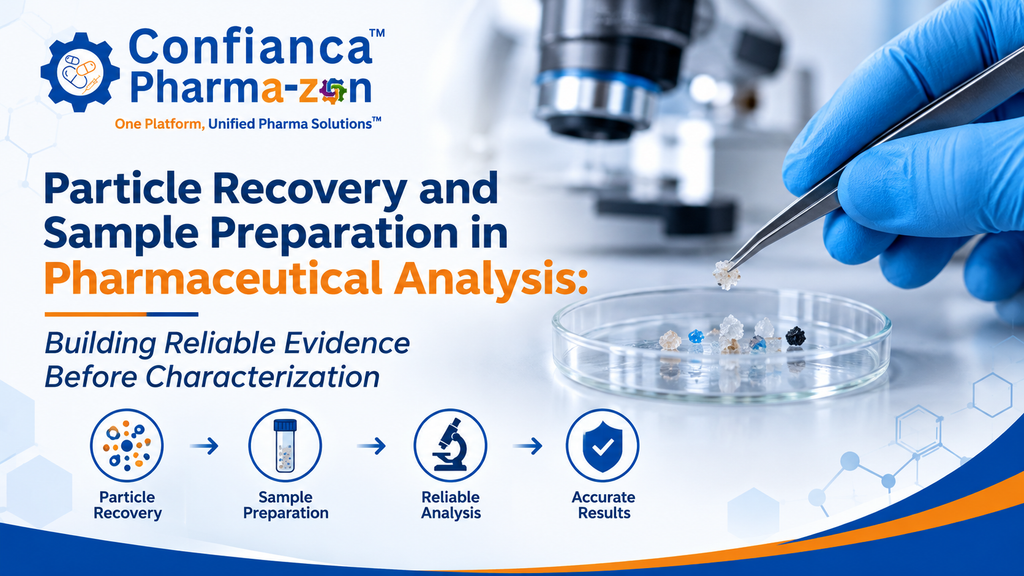
Particle Recovery and Sample Preparation in Pharmaceutical Analysis: Building Reliable Evidence Before Characterization
Introduction
In pharmaceutical manufacturing, the discovery of an unknown particle in an injectable product, raw material, process sample, or manufacturing component can trigger a detailed quality investigation. However, obtaining an accurate analytical result does not begin when a sample enters an analytical instrument. It begins much earlier, with the recovery, handling, preservation, and preparation of the particle.
Pharmaceutical particle recovery is an important stage in contamination investigations because even a sophisticated analytical instrument cannot provide reliable information if the original sample has been contaminated, damaged, lost, or incorrectly prepared.
A particle may contain valuable evidence about its physical structure, morphology, elemental composition, and possible material origin. Poor sample handling can alter its surface, introduce additional contamination, or make subsequent analysis difficult.
For pharmaceutical manufacturers, understanding the complete particle recovery and sample preparation workflow is therefore essential for obtaining meaningful analytical results.
This article explains the importance of particle recovery, different sample collection methods, preparation techniques, common challenges, and best practices for improving the reliability of pharmaceutical particle characterization.
1. What Is Pharmaceutical Particle Recovery?
Pharmaceutical particle recovery is the controlled process of isolating particulate matter from a pharmaceutical product, process sample, equipment component, or other relevant source for further examination.
The objective is to obtain a representative particle sample while minimizing contamination, physical damage, and loss of important analytical information.
Particle recovery may be required during investigations involving:
- Visible particles in injectable products.
- Unknown particles in pharmaceutical solutions.
- Fibrous contamination in manufacturing environments.
- Metallic particles originating from equipment.
- Glass fragments from containers or processing operations.
- Polymeric particles from tubing, seals, or packaging.
- Particulate contamination associated with filtration systems.
- Foreign particles identified during quality control investigations.
The recovery method must be selected according to the sample matrix, particle properties, investigation objective, and intended analytical techniques.
A method suitable for recovering metallic particles may not necessarily be appropriate for delicate polymeric particles or biological material.
2. Why Sample Preparation Is Critical in Particle Characterization
Sample preparation directly influences the quality and interpretability of analytical findings.
Consider a situation where a pharmaceutical manufacturer identifies a small black particle inside an injectable vial.
The investigation team needs to determine whether the particle is metallic, polymeric, carbonaceous, or another material.
If the particle is recovered using an unsuitable tool, transferred onto a contaminated surface, or exposed to an incompatible cleaning solution, the resulting analytical data may no longer represent the original particle.
Proper sample preparation helps address several important requirements.
Preservation of Original Particle Characteristics
The original particle morphology, surface condition, and composition should be preserved as much as possible.
Mechanical pressure, excessive handling, unsuitable solvents, and aggressive cleaning procedures can alter the sample.
Prevention of Secondary Contamination
Tools, filters, containers, gloves, and laboratory surfaces may introduce foreign particles.
Appropriate blanks and handling controls help distinguish sample-related findings from contamination introduced during preparation.
Improved Analytical Accuracy
SEM-EDS, FTIR, Raman spectroscopy, and other analytical techniques have different sample requirements.
Correct preparation helps ensure that the sample is compatible with the selected analytical method.
Better Investigation Traceability
A documented recovery process provides a clear record of where the sample originated, how it was collected, and how it was handled before analysis.
3. Common Particle Recovery Methods Used in Pharmaceutical Investigations
A. Membrane Filtration
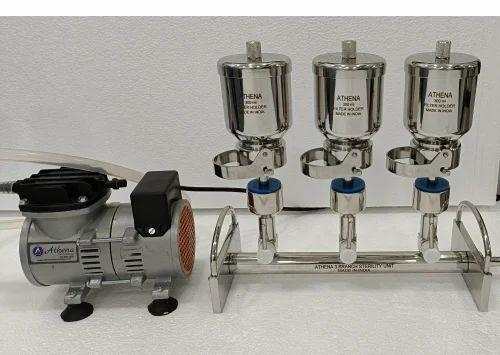
Membrane filtration is commonly considered when particulate matter must be recovered from liquid samples.
The liquid sample is passed through an appropriate membrane, allowing particles to be retained for subsequent examination.
The selection of membrane material and pore size depends on:
- Expected particle dimensions.
- Sample composition.
- Solvent compatibility.
- Intended analytical technique.
- Potential interference from the membrane.
- Recovery efficiency.
For example, a membrane selected for routine particulate collection should also be evaluated for its compatibility with the subsequent analytical method.
Membrane filtration may be useful for recovering particles from injectable solutions, pharmaceutical water samples, and other suitable liquid matrices.
B. Direct Particle Collection
When a visible particle can be individually located, direct collection may be appropriate.
Depending on the particle and sample conditions, suitable methods may include carefully controlled mechanical collection using clean tools or specialized laboratory handling equipment.
The main advantage is that individual particles can be isolated without processing the entire sample through a filtration procedure.
However, direct collection requires careful handling because small particles may be easily lost or damaged.
C. Microscopic Isolation
Microscopic examination can help locate particles that are difficult to identify or separate using ordinary laboratory procedures.
Stereo microscopy and other suitable optical microscopy techniques may be used to examine particle shape, dimensions, color, and surface characteristics.
Once identified, selected particles may be isolated for further investigation.
D. Surface and Equipment Sample Collection
Particle investigations are not limited to finished pharmaceutical products.
In some cases, the investigation may require examination of equipment surfaces, manufacturing components, process-contact materials, or environmental samples.
Appropriate collection methods should be selected according to the surface and the material being investigated.
Where source comparison is required, reference samples may be collected from relevant manufacturing components under a documented sampling plan.
4. Step-by-Step Pharmaceutical Particle Sample Preparation Workflow
A structured workflow helps improve consistency and minimize errors during particle recovery.
Step 1: Define the Investigation Objective
Before collecting a particle, determine what the investigation needs to establish.
Possible objectives include:
- Identification of unknown particulate matter.
- Determination of elemental composition.
- Identification of polymeric or organic material.
- Evaluation of particle morphology.
- Comparison with manufacturing equipment materials.
- Investigation of possible contamination sources.
The objective determines the most appropriate collection and preparation method.
Step 2: Review the Sample Matrix
Understand the characteristics of the sample containing the particle.
Important considerations include:
- Liquid or solid sample.
- Product viscosity.
- Chemical composition.
- Solvent characteristics.
- Presence of dissolved substances.
- Expected particle quantity.
- Potential sensitivity of the particle to preparation conditions.
This assessment helps prevent the selection of unsuitable recovery techniques.
Step 3: Select Appropriate Recovery Materials
Select suitable filters, collection tools, containers, and accessories.
Materials should be compatible with the sample and should not introduce significant analytical interference.
For example, when preparing a sample for SEM-EDS analysis, the substrate should be considered carefully because its elemental signals may interfere with the interpretation of particle composition.
Step 4: Establish Contamination Prevention Controls
Use controlled sample handling procedures.
Depending on the investigation, these may include:
- Clean sample collection equipment.
- Appropriate protective clothing and gloves.
- Controlled laboratory work areas.
- Dedicated sample containers.
- Blank or control samples.
- Documented handling procedures.
The purpose is to minimize the introduction of unrelated particles.
Step 5: Recover the Particle
Perform the selected recovery procedure under controlled conditions.
Record the sample volume or quantity, filter details where applicable, collection conditions, and any deviations.
If multiple particles are present, consider documenting individual particles separately rather than treating all particles as one homogeneous sample.
Step 6: Perform Initial Microscopic Examination
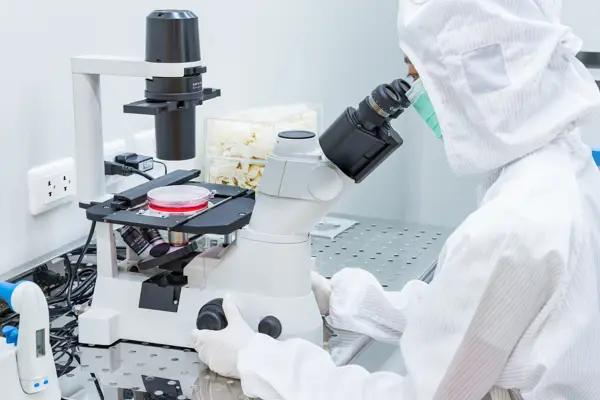
Examine the recovered particle using an appropriate microscope.
Document:
- Particle shape.
- Approximate dimensions.
- Color and appearance.
- Surface characteristics.
- Structural features.
- Visible irregularities.
Capture representative images wherever possible.
Step 7: Select the Analytical Method
The recovered sample can then be evaluated using suitable analytical techniques.
| Analytical technique | Main application |
|---|---|
| Optical microscopy | Shape, color and visible morphology |
| SEM | High-resolution particle morphology |
| SEM-EDS | Elemental composition and distribution |
| FTIR | Molecular identification of suitable materials |
| Raman spectroscopy | Molecular and structural identification |
| TGA/STA | Thermal behavior and material characterization |
Not every particle requires every analytical technique. The method should be justified by the investigation objective and sample limitations.
Step 8: Interpret Analytical Results
Analytical findings should be evaluated together rather than independently.
For example, SEM imaging may reveal the morphology of a particle, while EDS provides information about its elemental composition.
A particle containing iron, chromium, and nickel may be consistent with a stainless-steel-related material. However, this result alone does not prove the precise equipment component from which it originated.
Additional comparative evidence may be necessary.
Step 9: Prepare the Final Analytical Record
A well-structured particle recovery and characterization record should include:
- Sample identification.
- Sample source and collection details.
- Recovery method.
- Preparation procedure.
- Analytical techniques.
- Microscopic images.
- Particle dimensions, where measured.
- Spectral and elemental findings.
- Relevant blank or control results.
- Method limitations.
- Interpretation and conclusion.
This documentation supports investigation traceability and scientific review.
5. Selecting the Right Analytical Technique After Recovery
The choice of analytical method depends on the material and the questions being investigated.
SEM-EDS for Metallic and Inorganic Particles
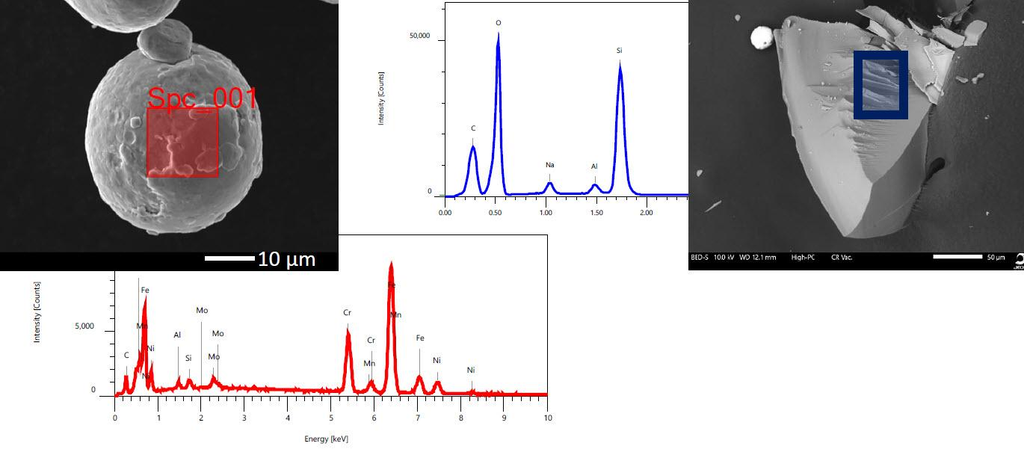
Scanning Electron Microscopy provides detailed information about particle morphology and surface characteristics.
Energy Dispersive X-ray Spectroscopy provides elemental information from the analyzed region.
This combination can help investigate:
- Metallic fragments.
- Inorganic particles.
- Glass-related material.
- Mineral particles.
- Equipment wear-related contamination.
EDS results should be interpreted with consideration of particle size, substrate contribution, interaction volume, and analytical limitations.
FTIR for Polymeric and Organic Materials
Fourier Transform Infrared Spectroscopy can support molecular identification of suitable organic and polymeric materials.
It may be useful for investigating:
- Plastic fragments.
- Rubber particles.
- Polymer fibers.
- Certain organic residues.
- Material degradation products.
Raman Spectroscopy for Molecular Characterization
Raman spectroscopy provides complementary molecular information and may be useful for examining selected pigments, polymers, minerals, and other materials.
Sample fluorescence and particle characteristics should be considered when choosing this technique.
Optical Microscopy for Initial Examination
Microscopy remains an important first step because it provides visual information that helps guide further analysis.
A combination of optical microscopy and advanced analytical techniques can provide a more complete understanding of unknown particles.
6. Common Challenges During Particle Recovery
Extremely Small Particles
Small particles may be difficult to locate, transfer, and preserve.
Specialized microscopy and careful handling procedures may be necessary.
Low Particle Quantity
Some investigations involve only one or two particles.
The analytical strategy should prioritize techniques that provide the greatest useful information while preserving the remaining sample.
Filter and Membrane Interference
The substrate may contribute its own analytical signals.
Appropriate blank evaluation and substrate selection are important, particularly when performing elemental analysis.
Particle Agglomeration
Several particles may become attached during filtration or drying.
This can complicate individual particle identification and size assessment.
Loss of Original Material Characteristics
Unsuitable washing, drying, or handling procedures may modify a particle.
Sample preparation should therefore be designed around the material’s expected properties.
7. How to Improve Reliability in Pharmaceutical Particle Investigations
Pharmaceutical organizations can strengthen their particle investigation processes through the following practices:
- Develop documented sample collection procedures.
- Define sample handling responsibilities.
- Select recovery materials according to analytical requirements.
- Use appropriate blanks and contamination controls.
- Maintain individual particle identification wherever practical.
- Capture microscopic images before advanced analysis.
- Record analytical limitations and uncertainties.
- Maintain traceability from collection through reporting.
- Compare findings with relevant manufacturing materials.
- Link analytical findings to quality risk assessment and CAPA.
8. Regulatory and Quality Considerations
Particle recovery and characterization should be incorporated into the pharmaceutical quality management system.
For injectable products, USP General Chapters , , and provide relevant context for particulate matter testing and visual inspection.
However, particle recovery and advanced material identification are complementary investigative activities. They do not replace applicable compendial testing, validated procedures, or required visual inspection activities.
Manufacturers should establish documented procedures appropriate to their product, manufacturing process, and applicable regulatory requirements.
9. How Confianca Pharmazon Supports Particle Characterization
Confianca Pharmazon supports pharmaceutical manufacturers through particle characterization-related services and analytical investigation support.
A structured approach to particle recovery, microscopic examination, and SEM-EDS analysis can help organizations investigate unknown particles and evaluate potential contamination sources.
For more complex investigations, sample preparation and analytical method selection should be planned according to the nature of the particle and the available sample material.
Our objective is to support pharmaceutical professionals with technically appropriate solutions for contamination investigation, material identification, and quality improvement.
Conclusion
Reliable pharmaceutical particle characterization begins long before analytical testing. Particle recovery and sample preparation are essential steps that influence the accuracy, reproducibility, and interpretation of analytical findings.
By selecting appropriate recovery methods, controlling contamination, preserving particle characteristics, and choosing suitable analytical techniques, pharmaceutical manufacturers can improve the quality of their contamination investigations.
A well-documented workflow also helps establish traceability, support root cause investigations, and strengthen evidence-based quality decisions.
Explore Confianca Pharmazon for pharmaceutical particle characterization services and analytical support.