
No products in the cart.
Blinded Defect Testing in Pharmaceutical Visual Inspection: Designing Reliable Knapp Kit Challenges Without Inspector Bias

Introduction
Visual inspection is a critical quality control activity in pharmaceutical manufacturing, especially for injectable products such as vials, ampoules, prefilled syringes, and cartridges.
Pharmaceutical manufacturers invest significant resources in inspector training, inspection equipment, lighting systems, and qualification procedures. However, one important question remains:
Does the inspection result genuinely reflect the inspector’s ability to detect defects, or is the result influenced by prior knowledge of the test samples?
This question highlights the importance of blinded defect testing.
When an inspector knows the location, identity, or expected characteristics of a defective unit, the inspection exercise may become predictable. The result may not accurately represent real-world inspection performance.
A properly designed pharmaceutical Knapp Kit challenge can help reduce this risk by incorporating controlled sample identification, appropriate blinding, defined defect categories, and documented evaluation procedures.
This article explores how blinded defect testing works, why it matters, how pharmaceutical manufacturers can design suitable Knapp Kit challenges, and how unbiased testing can strengthen visual inspection qualification.
1. What Is Blinded Defect Testing?
Blinded defect testing is an approach in which inspectors perform an evaluation without knowing the exact identity or position of the challenge samples.
In pharmaceutical visual inspection, the approach may involve a controlled collection of acceptable and defective containers.
The inspector receives the test samples under defined conditions and evaluates each unit according to the approved inspection procedure.
The identity of the samples is maintained separately by an authorized person or controlled documentation system.
The objective is to reduce the influence of prior information on inspection decisions.
Blinding may involve:
- Concealing the defect identity from inspectors.
- Using coded sample identification.
- Randomizing sample presentation.
- Controlling the sequence of test units.
- Maintaining a separate reference record.
- Preventing unauthorized access to defect information.
The exact design should depend on the intended qualification exercise and the manufacturer’s quality procedures.
2. Why Inspector Bias Matters in Visual Inspection
Human visual inspection involves perception, attention, experience, and decision-making.
An inspector may perform differently depending on the information available before an inspection exercise.
For example, imagine that an inspector is told that the next five containers contain black particles.
The inspector may pay particular attention to black particles and become less focused on other defect categories.
Similarly, if an inspector knows that defective units are always presented near the end of a test sequence, inspection decisions may become influenced by expectations.
This can create several challenges.
Confirmation Bias
Inspectors may focus on defects they expect to find rather than evaluating each container independently.
Sequence Bias
Predictable sample arrangements can influence the inspector’s attention and decision-making.
Recognition Bias
Repeated exposure to the same defect samples may allow inspectors to remember individual containers instead of demonstrating genuine defect recognition capability.
Evaluation Bias
If test administrators know the sample identities but do not follow controlled procedures, inconsistent scoring or unintended information disclosure may occur.
A controlled blind-testing design helps minimize these influences.
3. The Role of Knapp Kits in Blinded Defect Testing
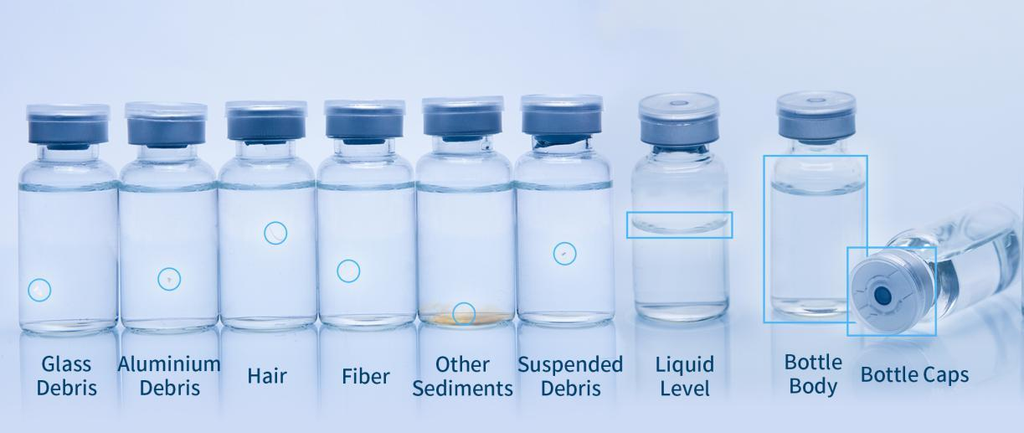
A Pharmaceutical Knapp Kit is a controlled collection of good and defective pharmaceutical containers designed to support visual inspection training, qualification, and performance evaluation.
Depending on the application, a kit may contain:
- Glass particles.
- Black particles.
- White particles.
- Metallic particles.
- Fibers.
- Foreign particulate matter.
- Cracked containers.
- Closure-related defects.
- Other customer-specific defects.
The kit can be designed for manual visual inspection or for challenging suitable automated inspection systems.
When combined with a controlled blinding strategy, it becomes possible to conduct a more structured assessment of inspection performance.
The physical defect samples, their characterization records, and the controlled evaluation methodology should work together.
4. Designing a Reliable Blinded Knapp Kit Challenge

A reliable challenge begins with a clearly defined protocol.
Step 1: Define the Qualification Objective
Determine what the test is intended to evaluate.
Possible objectives include:
- Initial inspector qualification.
- Periodic inspector requalification.
- Evaluation of a new inspection procedure.
- Assessment of defect detection capability.
- Comparison of inspection conditions.
- Qualification of an automated inspection system.
The test design should reflect the intended objective.
Step 2: Establish the Defect Library
Develop a documented collection of relevant defect samples.
Each sample should have a unique identification record.
Depending on the application, the record may contain:
- Defect category.
- Particle material or defect type.
- Particle dimensions where applicable.
- Container identification.
- Microscopic images.
- Relevant analytical characterization.
- Reference acceptance or rejection classification.
The library should represent the defects that are meaningful to the product and inspection process.
Step 3: Establish Unique Sample Coding
Each container should have a controlled identification code.
The coding system should allow authorized personnel to identify the sample without exposing its defect identity to the inspector.
A separate master record should connect the sample code with the corresponding reference information.
The system should also prevent accidental duplication or incorrect identification.
Step 4: Randomize Sample Presentation
A predictable test sequence may influence inspection decisions.
Randomized presentation helps ensure that inspectors evaluate the units based on their actual appearance.
The sequence should be generated and controlled according to an approved procedure.
Where repeated assessments are conducted, the test administrator should consider sample familiarity and previous exposure.
Step 5: Maintain Blinding During the Exercise
Inspectors should not have access to the reference sample list or defect locations.
The test administrator should ensure that:
- Labels do not reveal defect identities.
- Containers are presented consistently.
- Sample sequences remain controlled.
- Reference records are protected.
- Test conditions are documented.
- Unplanned information sharing is prevented.
Step 6: Record Inspection Decisions
For each sample, record the inspector’s decision.
Depending on the protocol, this may include:
- Accepted or rejected.
- Defect identified.
- Incorrect classification.
- Missed defect.
- Inspection time, where relevant.
- Additional observations.
The original results should be preserved for review.
Step 7: Decode and Evaluate Results
After the inspection exercise, authorized personnel can compare the recorded decisions with the reference sample identification.
The evaluation should distinguish between:
- Correctly rejected defective units.
- Missed defective units.
- Correctly accepted good units.
- False rejection of acceptable units.
This allows the organization to understand both detection effectiveness and unnecessary rejection.
Step 8: Document the Outcome
Prepare a controlled report containing the protocol reference, sample identification, inspection conditions, results, deviations, and conclusion.
Where applicable, define follow-up actions according to the approved qualification criteria.
5. Understanding False Accepts and False Rejects
An effective inspection assessment should consider more than the number of correctly identified defects.
Two important performance outcomes are false accepts and false rejects.
| Inspection outcome | Meaning | Quality significance |
|---|---|---|
| True rejection | Defective unit correctly rejected | Correct defect detection |
| False acceptance | Defective unit accepted | Potential quality risk |
| True acceptance | Acceptable unit correctly accepted | Correct acceptance decision |
| False rejection | Acceptable unit rejected | Unnecessary product rejection |
False Acceptance
A false acceptance occurs when a defective container is incorrectly accepted.
This is particularly important because a missed defect may indicate limitations in the inspection method, sample challenge, or inspector performance.
False Rejection
A false rejection occurs when a good container is incorrectly rejected.
Although it may not represent the same risk as a missed critical defect, excessive false rejection can increase product losses and reduce operational efficiency.
Both outcomes should be evaluated within the context of the qualification objective and the approved acceptance criteria.
6. Blinded Testing for Manual and Automated Inspection
The principles of controlled sample identification and challenge testing can support different inspection technologies.
Manual Visual Inspection
For manual inspection, blinded Knapp Kit testing can help evaluate an inspector’s ability to recognize defined defects under specified conditions.
Important factors include:
- Lighting conditions.
- Background characteristics.
- Inspection duration.
- Container movement.
- Rotation procedure.
- Inspector experience.
- Rest periods and ergonomics.
The inspection protocol should define these conditions to improve consistency.
Automated Visual Inspection
Automated inspection systems use cameras, lighting, image processing, and programmed decision algorithms to identify defects.
Challenge samples may be used to evaluate the performance of suitable systems.
The test design should consider:
- Container format.
- Product appearance.
- Particle type.
- Particle position.
- Machine speed.
- Lighting configuration.
- Camera settings.
- Inspection algorithm.
- Defect detection and rejection performance.
Automated systems require their own suitable qualification and validation approach. Results from manual inspector qualification should not automatically be treated as evidence of machine performance.
7. The Importance of Particle Characterization in Knapp Kits
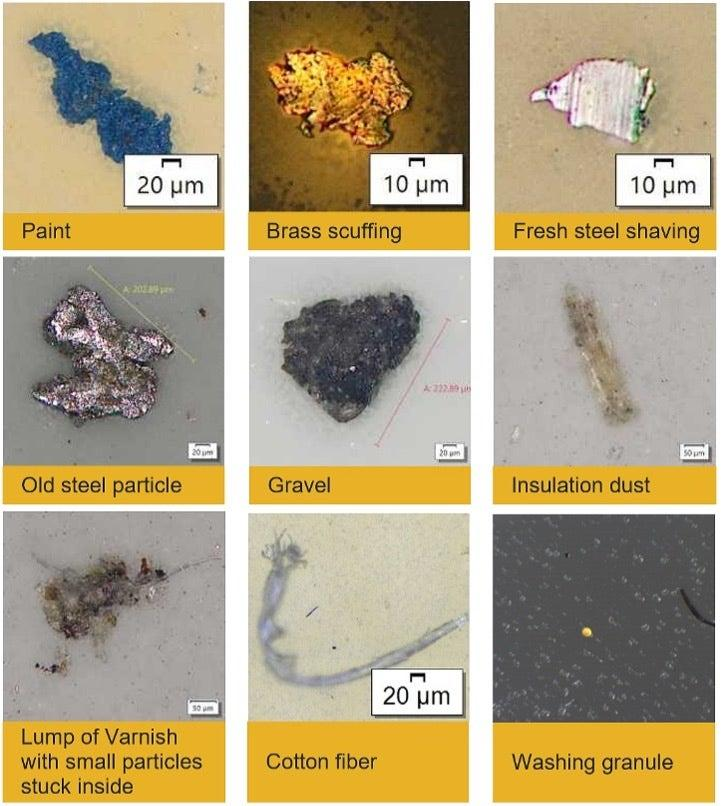
A defect challenge is only meaningful when the reference characteristics of its samples are sufficiently understood and documented.
For particulate defects, particle characterization can support the preparation of reliable reference records.
Relevant information may include:
- Particle material.
- Particle dimensions.
- Shape and morphology.
- Microscopic appearance.
- Elemental composition, where required.
- Representative images.
- Individual sample identification.
For example, a metallic particle and a glass particle may have similar apparent dimensions but different visual characteristics.
Documenting the relevant physical properties helps define the actual inspection challenge.
Particle characterization should be performed using methods appropriate to the sample and intended level of characterization.
8. Common Mistakes During Blinded Knapp Kit Testing
Predictable Sample Sequences
Repeated sequences may allow inspectors to anticipate defect positions.
Poor Sample Identification
Duplicate or incorrect sample codes can compromise result interpretation.
Inadequate Reference Documentation
Without reliable reference records, it may be difficult to determine whether an inspection decision was correct.
Uncontrolled Test Conditions
Changes in lighting, background, inspection duration, or container handling may affect results.
Reusing Familiar Samples Without Assessment
Repeated exposure to the same samples may influence test outcomes.
Sample reuse should be managed through a documented programme.
Evaluating Only Defect Detection
Ignoring false rejection rates may provide an incomplete picture of inspection performance.
9. Documentation Required for a Controlled Challenge
A structured Knapp Kit testing programme should maintain relevant documentation, such as:
- Approved test protocol.
- Sample master identification list.
- Defect characterization records.
- Coding and randomization records.
- Inspection conditions.
- Individual inspector results.
- Evaluation and calculation records.
- Deviations and investigations.
- Qualification conclusion.
- Follow-up actions and approvals.
Documentation requirements should be proportionate to the intended use and defined in the pharmaceutical quality system.
10. Regulatory and Quality Framework
Pharmaceutical visual inspection programmes should be developed with consideration of applicable regulatory and compendial requirements.
Relevant references include:
- USP General Chapter – Visible Particulates in Injections.
- USP General Chapter – Visual Inspection of Injections.
- Applicable GMP requirements for sterile medicinal product manufacturing.
These references provide important context for visual inspection programmes, but a Knapp Kit alone does not establish compliance.
The manufacturer must define suitable procedures, qualification requirements, acceptance criteria, and documented controls for its own inspection operations.
11. How Confianca Pharmazon Supports Knapp Kit Requirements
Confianca Pharmazon provides pharmaceutical visual inspection Knapp Kits and related defect sample solutions for pharmaceutical manufacturers.
Depending on the agreed requirement, solutions may include:
- Customized particle and defect samples.
- Different pharmaceutical container formats.
- Particle and fiber sizing support.
- Microscopic documentation.
- Reference defect identification.
- Manual visual inspection challenge sets.
- Automated inspection challenge sets.
- Supporting documentation.
- Technical assistance for visual inspection programmes.
The kit configuration should be selected according to the customer’s product, container type, inspection process, and qualification objectives.
Conclusion
Blinded defect testing is an important consideration when designing reliable pharmaceutical visual inspection challenges.
By controlling sample identification, randomizing presentation, protecting reference information, and documenting inspection decisions, manufacturers can reduce avoidable testing bias and improve the interpretability of qualification results.
A well-designed Knapp Kit programme should combine properly characterized defects, suitable challenge samples, controlled inspection conditions, and documented evaluation criteria.
Ultimately, the purpose is not simply to test whether an inspector can identify a known defect. It is to establish meaningful evidence about the capability of the visual inspection process.
Contact Confianca Pharmazon for customized Pharmaceutical Knapp Kits and visual inspection defect sample solutions.