
No products in the cart.
Top Features Every GMP-Compliant Visual Inspection Booth Should Have for Pharmaceutical Manufacturing
Introduction
In pharmaceutical manufacturing, patient safety is the highest priority. Every injectable product, vial, ampoule, cartridge, or pre-filled syringe that reaches a patient must be free from visible defects, particulate contamination, cracks, discoloration, and packaging abnormalities.
This is where visual inspection plays a critical role.
Even with advanced manufacturing processes, defects can occasionally occur due to raw materials, equipment wear, human intervention, or environmental factors. Therefore, pharmaceutical companies must establish robust inspection systems that comply with GMP regulations and global standards.
A GMP-Compliant Visual Inspection Booth serves as the foundation for effective manual visual inspection programs. It provides inspectors with a controlled environment to identify defects accurately and consistently while ensuring compliance with regulatory expectations.
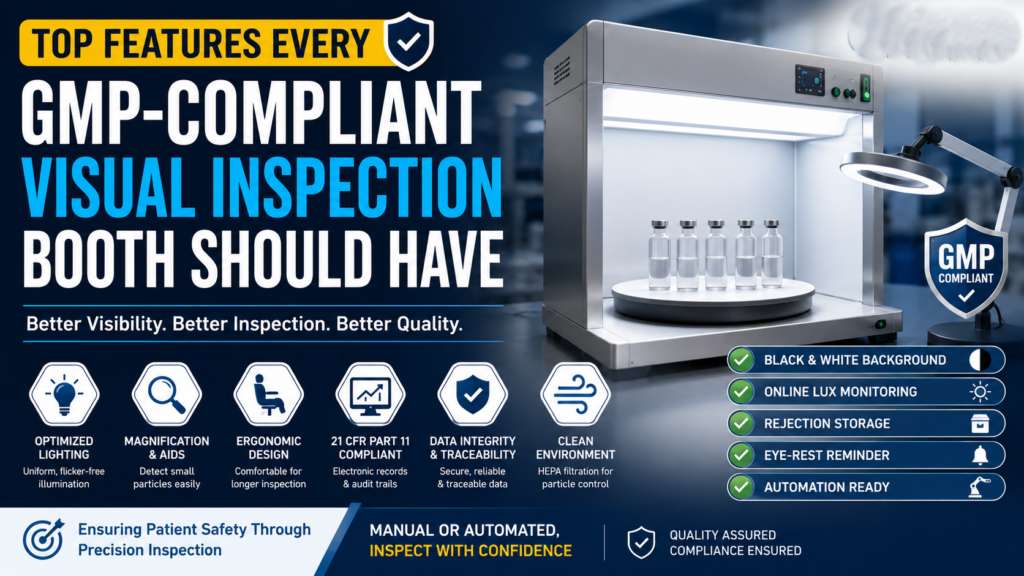
According to Confianca Pharmazon, modern visual inspection booths should include features such as black and white backgrounds, standard luminous facilities, online lux measurement, magnifying lenses, height adjustment systems, rejection storage compartments, and 21 CFR Part 11 compliant reporting capabilities.
In this article, we’ll explore the most important features every GMP-compliant visual inspection booth should have and how these features improve product quality, inspection accuracy, compliance, and operational efficiency.
Why Visual Inspection Booths Are Critical in Pharma Manufacturing
Visual inspection is often the final quality checkpoint before pharmaceutical products are released to the market.
The objective is to detect:
- Visible particulate matter
- Glass particles
- Metal particles
- Fibers
- Cracks
- Cosmetic defects
- Container closure defects
- Product discoloration
- Incorrect fill volumes
- Packaging abnormalities
A poorly designed inspection environment can result in:
- Missed defects
- Product recalls
- Regulatory observations
- Warning letters
- Patient safety risks
This is why a GMP-Compliant Visual Inspection Booth is not merely furniture—it is a validated quality control system that directly impacts product quality and regulatory compliance.
Key Regulatory Expectations for Visual Inspection Booths
Before discussing features, it’s important to understand what regulators expect.
Pharmaceutical manufacturers typically align their visual inspection programs with:
- US FDA 21 CFR Part 211
- EU GMP Annex 1
- WHO GMP Guidelines
- USP <790>
- USP <1790>
- PIC/S Guidelines
- Data Integrity Requirements
- 21 CFR Part 11 Requirements
These regulations emphasize:
- Controlled inspection environments
- Adequate illumination
- Qualified inspectors
- Documented inspection results
- Traceability
- Consistency in inspection practices
Therefore, investing in the right GMP-Compliant Visual Inspection Booth becomes a strategic necessity.
1. Black and White Background Inspection Zones
One of the most fundamental requirements is the availability of both black and white backgrounds.
Why It Matters
Different defects become visible under different contrast conditions.
White Background Helps Detect:
- Dark particles
- Black fibers
- Metal particles
- Dark cosmetic defects
Black Background Helps Detect:
- White particles
- Glass fragments
- Transparent particles
- Light-colored fibers
Without dual backgrounds, inspectors may miss critical defects.
A high-quality GMP-Compliant Visual Inspection Booth should provide properly positioned black and white inspection panels that maximize visibility.
2. Standardized Lighting System
Lighting is the heart of pharmaceutical visual inspection.
Even highly trained inspectors cannot identify defects accurately if lighting conditions are inconsistent.
Ideal Lighting Characteristics
The inspection booth should include:
- Uniform illumination
- Adjustable lighting
- Glare-free design
- Consistent lux levels
- Minimal shadow formation
Benefits
- Improved defect detection
- Reduced operator fatigue
- Consistent inspection outcomes
- Better audit readiness
Standard luminous facilities are considered a core requirement for GMP-compliant inspection environments.
3. Online Lux Measurement System
Modern regulatory inspections increasingly focus on objective evidence.
Instead of manually recording lighting levels, advanced booths include online lux monitoring.
Why Online Lux Measurement Is Important
Benefits include:
- Continuous monitoring
- Real-time alerts
- Automated documentation
- Improved data integrity
- Easier audits
For example, if lighting drops below validated limits, the system can immediately alert operators and supervisors.
This feature significantly strengthens GMP compliance and inspection reliability.
4. 21 CFR Part 11 Compliant Electronic Reporting
The pharmaceutical industry is rapidly moving toward digital quality systems.
A modern GMP-Compliant Visual Inspection Booth should support electronic records and electronic signatures compliant with 21 CFR Part 11 requirements.
Essential Features
- Audit trails
- User access controls
- Electronic signatures
- Secure data storage
- Change tracking
- Report generation
Benefits
- Better traceability
- Reduced paperwork
- Improved compliance
- Faster investigations
- Enhanced data integrity
Companies that still rely entirely on paper-based records often face challenges during inspections and audits.
5. Ergonomic Height Adjustment
Inspector fatigue is one of the leading causes of visual inspection errors.
Operators often inspect thousands of units per shift.
Without ergonomic support, productivity and detection rates decline significantly.
Features to Look For
- Adjustable workstations
- Adjustable chair systems
- Flexible inspection angles
- Comfortable arm support
According to Confianca Pharmazon, height-adjustable facilities are important components of modern visual inspection booths.
Benefits
- Reduced fatigue
- Improved concentration
- Increased inspection accuracy
- Better employee comfort
6. Magnifying Lens Integration
Some defects are difficult to detect with the naked eye.
Integrated magnifying lenses help inspectors identify:
- Hairline cracks
- Tiny fibers
- Small particles
- Surface imperfections
Advantages
- Improved defect identification
- Better confidence in inspection decisions
- Reduced false acceptance
Magnification becomes especially useful for small-volume injectables and high-value biologics.
7. Eye-Rest Reminder System with Audio Buzzer
Human vision naturally deteriorates during prolonged inspection activities.
To address this challenge, advanced booths include eye-rest reminder systems.
How It Works
The system provides:
- Timed reminders
- Audio buzzers
- Scheduled inspection breaks
According to visual inspection best practices, periodic eye rest significantly improves defect detection performance. Confianca Pharmazon includes audio buzzer functionality for operator eye-rest management.
Benefits
- Reduced visual fatigue
- Improved focus
- Consistent inspection performance
- Better compliance with SOPs
8. Dedicated Rejection Storage Compartments
Rejected products must be segregated properly.
Mixing rejected units with accepted products can create serious compliance risks.
Important Features
A quality inspection booth should include:
- Separate rejection drawers
- Defined compartments
- Product segregation areas
- Traceable rejection processes
Benefits include:
- Better investigation capability
- Improved GMP compliance
- Reduced mix-up risks
- Enhanced product traceability
9. Support for Visual Inspection Qualification Programs
A visual inspection booth should support inspector qualification activities.
Qualified inspectors are essential for maintaining consistent detection capability.
Training programs often include:
- Defect identification
- Probability of Detection (POD)
- USP <790> guidance
- USP <1790> guidance
- Tyndall lighting techniques
- Defect classification
Confianca Pharmazon also provides qualification kits, Knapp kits, training programs, and visual inspection guidance aligned with USP requirements.
10. Integration with Visual Inspection Booth Automation
The future of pharmaceutical inspection lies in automation.
While manual inspection remains important, manufacturers increasingly seek hybrid solutions combining human expertise with digital technologies.
Features of Visual Inspection Booth Automation
- Electronic batch records
- Automated lux monitoring
- Digital defect logging
- Analytics dashboards
- Performance monitoring
- Audit trail generation
Benefits
- Faster inspections
- Reduced human error
- Better compliance
- Enhanced productivity
Organizations implementing Visual Inspection Booth Automation often experience measurable improvements in operational efficiency and quality consistency.
Additional Features Worth Considering
When selecting a visual inspection booth, consider these advanced capabilities:
Digital Dashboards
Monitor:
- Inspection rates
- Rejection trends
- Operator performance
- Batch statistics
Barcode Integration
Supports:
- Product tracking
- Batch traceability
- Error prevention
Data Analytics
Provides:
- Trend analysis
- Defect patterns
- Continuous improvement opportunities
Customizable Configurations
Every facility has unique requirements.
Look for solutions offering:
- Custom dimensions
- Special lighting options
- Additional storage
- Industry-specific configurations
How to Choose the Right GMP-Compliant Visual Inspection Booth
Before purchasing, ask these questions:
Regulatory Compliance
- Is it GMP compliant?
- Does it support 21 CFR Part 11?
Inspection Performance
- Are lighting levels validated?
- Is lux monitoring available?
Operator Comfort
- Is the workstation ergonomic?
- Does it support height adjustment?
Documentation
- Are electronic reports available?
- Is audit trail functionality included?
Future Readiness
- Can it integrate with automation systems?
- Does it support digital transformation initiatives?
A booth that satisfies these requirements delivers long-term value beyond simple compliance.
Frequently Asked Questions (FAQs)
What is a GMP-Compliant Visual Inspection Booth?
A GMP-Compliant Visual Inspection Booth is a controlled inspection workstation designed to support pharmaceutical visual inspection activities while meeting regulatory and GMP requirements.
Why are black and white backgrounds necessary?
They help inspectors detect different types of particles and defects by providing contrasting backgrounds that improve visibility.
What is the purpose of online lux measurement?
Online lux measurement continuously monitors lighting conditions and ensures inspection activities remain within validated limits.
Why is 21 CFR Part 11 compliance important?
It ensures electronic records and electronic signatures are secure, traceable, and acceptable during regulatory audits.
Can visual inspection booths be automated?
Yes. Modern systems support Visual Inspection Booth Automation through digital records, analytics, reporting systems, and real-time monitoring capabilities.
How often should inspectors take eye-rest breaks?
Organizations typically define break frequencies through SOPs and qualification programs, often supported by audio reminder systems integrated into inspection booths.
Conclusion
The pharmaceutical industry operates in an environment where quality failures can have serious consequences for patients, companies, and regulators alike.
A well-designed GMP-Compliant Visual Inspection Booth is more than an operational necessity—it is a strategic investment in product quality, regulatory compliance, and patient safety.
The best inspection booths combine:
- Black and white backgrounds
- Standardized illumination
- Online lux monitoring
- Magnification systems
- Ergonomic design
- Eye-rest management
- Rejection segregation
- 21 CFR Part 11 compliance
- Automation readiness
These features enable pharmaceutical manufacturers to improve inspection accuracy, strengthen compliance programs, and maintain the highest standards of quality assurance.
Ready to Upgrade Your Visual Inspection Process?
Discover how Confianca Pharmazon’s advanced Visual Inspection Booth Automation solutions can help your organization improve inspection accuracy, ensure GMP compliance, enhance data integrity, and prepare for future-ready pharmaceutical manufacturing.
Explore our Visual Inspection Booth Automation solutions and speak with our experts today.
Your trusted partner for pharma skills, systems, and solutions.