No products in the cart.
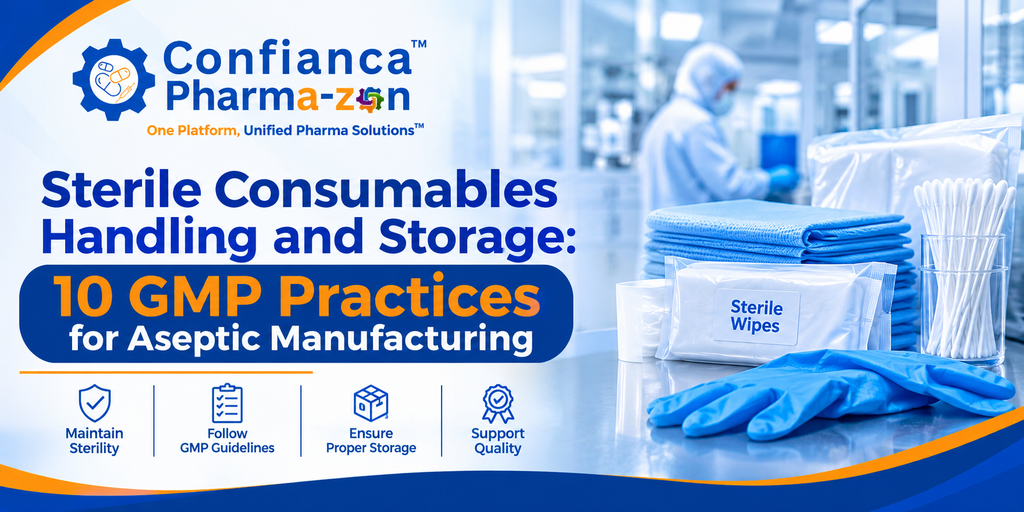
Sterile Consumables Handling and Storage: 10 GMP Practices for Aseptic Manufacturing
Introduction
In pharmaceutical manufacturing, maintaining a controlled sterile environment requires more than qualified equipment, trained personnel and effective cleaning procedures.
Every material entering a controlled manufacturing area must be appropriately selected, handled and managed to reduce the possibility of contamination.
Sterile consumables play an important role in this process.
Products such as sterile gloves, cleanroom wipes, sterile forceps, disposable bags, sterile markers, mops, garments and other aseptic accessories are used throughout pharmaceutical manufacturing operations.
However, purchasing sterile consumables alone does not guarantee that their sterile condition will be maintained until the point of use.
Improper transportation, damaged packaging, uncontrolled storage, incorrect handling and inadequate documentation can compromise their suitability.
This is why Sterile Consumables Handling and Storage should be an important part of every pharmaceutical contamination control programme.
This article explains ten practical GMP considerations for managing sterile consumables from supplier qualification and receipt to storage, cleanroom transfer and final use.
1. Understand the Role of Sterile Consumables in Aseptic Manufacturing
Sterile consumables are products intended for use in controlled environments where microbial and particulate contamination must be managed.
Depending on the manufacturing activity, they may include:
Personal Protective and Gowning Materials
- Sterile gloves.
- Sterile coveralls.
- Sterile sleeves.
- Sterile shoe covers.
- Other suitable cleanroom garments.
Cleaning and Disinfection Materials
- Sterile wipes.
- Sterile mops.
- Cleanroom dusters.
- Sterile IPA products.
- Other approved cleaning accessories.
Handling and Process Accessories
- Sterile disposable forceps.
- Sterile bags.
- Sterile transfer accessories.
- Sterile markers.
- Sterilization-indicating tape.
Packaging and Material Transfer Products
- Sterile zip-lock bags.
- Sterile LDPE bags.
- Autoclavable bags.
- Other controlled material-transfer products.
The specific product should be selected according to the application, cleanroom classification, contamination risk and approved procedures.
2. Establish Appropriate Supplier Qualification
Supplier qualification is an important first step in sterile consumable management.
A supplier should be evaluated according to the organization’s quality requirements and the intended application of the supplied product.
Important evaluation areas may include:
- Product specifications.
- Manufacturing information.
- Sterilization process information.
- Applicable certificates.
- Packaging configuration.
- Product traceability.
- Batch identification.
- Shelf-life information.
- Change notification procedures.
- Complaint management.
- Supplier quality history.
Where products are supplied as sterile, the manufacturer or supplier should provide suitable supporting documentation for the claimed sterilization status.
The organization should not assume that every cleanroom consumable is sterile simply because it is packaged for cleanroom use.
A sterile product and a non-sterile cleanroom product may have different intended applications and control requirements.
3. Verify Packaging Integrity During Receipt
Packaging is one of the most important protective barriers for sterile consumables.
Even when a product has undergone a suitable sterilization process, damaged packaging can affect its suitability for use.
During receipt inspection, personnel should examine:
- Outer packaging condition.
- Inner sterile barrier condition.
- Tears and punctures.
- Seal integrity.
- Moisture damage.
- Missing identification labels.
- Batch or lot number.
- Expiry or retest information, where applicable.
- Sterilization identification.
- Shipping damage.
Products with compromised sterile barrier packaging should be segregated and evaluated according to the approved procedure.
The organization should not release questionable material simply because the outer carton appears undamaged.
4. Verify Sterilization and Supporting Documentation
Different sterile consumables may be processed using different sterilization methods.
Common sterilization approaches include:
Gamma Irradiation
Gamma irradiation is used for certain disposable pharmaceutical and medical-related products.
Depending on the validated process, documentation may include:
- Sterilization method.
- Product identification.
- Batch or lot reference.
- Sterilization certificate.
- Processing date.
- Applicable validation or dose information.
- Release status.
Steam Sterilization
Steam sterilization may be used for suitable autoclavable products.
Important considerations include:
- Material compatibility.
- Defined sterilization cycle.
- Load configuration.
- Packaging suitability.
- Process validation.
- Cycle documentation.
Other Sterilization Technologies
Other methods may be appropriate depending on the product, material and intended application.
The manufacturer should provide suitable information demonstrating that the selected process is appropriate for the supplied product.
The receiving organization should evaluate documentation against its approved specifications and quality requirements.
5. Maintain Controlled Storage Conditions
After receipt, sterile consumables should be stored under defined conditions.
The storage environment should protect products from physical damage, contamination and deterioration.
Recommended practices include:
- Designated storage areas.
- Controlled access.
- Appropriate environmental conditions.
- Protection from moisture.
- Protection from direct sunlight where required.
- Separation from non-sterile materials.
- Protection against dust and physical damage.
- Clear product identification.
- Defined stock rotation.
Storage requirements should always follow the manufacturer’s instructions and approved internal procedures.
Products should not be stored in a way that compresses, damages or unnecessarily stresses their sterile barrier packaging.
6. Implement Expiry and Inventory Management
Sterile consumables should be managed through a controlled inventory system.
Important information includes:
- Product name.
- Product code.
- Manufacturer.
- Batch number.
- Quantity received.
- Receipt date.
- Expiry date.
- Sterilization status.
- Storage location.
- Current inventory status.
A First-Expiry-First-Out (FEFO) approach can help ensure that products approaching expiry are used before products with later expiry dates.
Inventory monitoring should also identify:
- Expired products.
- Damaged products.
- Recalled batches.
- Products under investigation.
- Unreleased materials.
Expired sterile consumables should not be used unless an appropriately justified and approved procedure explicitly permits an alternative disposition.
7. Establish Controlled Cleanroom Material Transfer
Moving sterile consumables into a cleanroom is an important contamination-control activity.
A product that is properly stored can still be exposed to contamination during transfer.
A controlled transfer procedure may involve:
- Verification of material identity.
- Review of the product’s release status.
- Inspection of packaging.
- Removal of unsuitable outer packaging where required.
- Surface disinfection using an approved compatible method.
- Transfer through an appropriate material airlock.
- Removal of successive packaging layers according to the transfer procedure.
- Introduction into the designated cleanroom area.
The precise transfer process should reflect the facility layout, cleanroom classification and contamination control strategy.
The disinfectant selected should be compatible with the material and packaging.
8. Control Handling During Point-of-Use Operations
Sterile consumables must be handled correctly after they enter the controlled area.
Examples include:
Sterile Gloves
Operators should inspect glove packaging before opening and follow approved gowning and glove-use procedures.
Gloves should be changed according to the applicable procedure, contamination events and process requirements.
Sterile Wipes
Sterile wipes should be selected according to the surface, cleaning application and particle-shedding requirements.
Opening, dispensing and handling should minimize unnecessary contact and exposure.
Sterile Forceps
Sterile forceps should be maintained in their protective packaging until required.
Their suitability should be assessed according to the material, intended application and required contact conditions.
Sterile Bags
Sterile bags should be used according to their intended transfer, storage or process application.
Their packaging and closure should be protected from damage.
Sterile Markers
Sterile markers should be selected for compatibility with the cleanroom environment and the intended labelling activity.
These products should be managed under defined procedures rather than treated as ordinary office supplies.
9. Evaluate Material Compatibility and Particle-Shedding Risk
Not every sterile consumable is suitable for every pharmaceutical application.
Material compatibility should be considered before introducing a new product into a controlled manufacturing process.
Relevant considerations include:
- Material composition.
- Surface characteristics.
- Particle shedding.
- Fibre release.
- Chemical compatibility.
- Disinfectant compatibility.
- Product-contact suitability.
- Temperature resistance.
- Mechanical strength.
- Intended application.
For example, a wipe used for general cleanroom cleaning may not automatically be suitable for a sensitive product-contact application.
Similarly, a disposable bag used for external material transfer may have different requirements from a bag used in a process involving direct product-contact considerations.
A risk-based evaluation can help establish whether the consumable is appropriate for its intended purpose.
10. Maintain Documentation and Periodic Review
Sterile consumable management should be supported by controlled quality records.
Important records may include:
- Approved supplier information.
- Product specifications.
- Purchase and receipt records.
- Batch certificates.
- Sterilization certificates.
- Packaging inspection records.
- Storage monitoring records, where applicable.
- Inventory and expiry records.
- Cleanroom transfer records.
- Usage records, where appropriate.
- Deviations and investigations.
- Supplier complaints.
- Change notifications.
Periodic review can help identify recurring issues such as packaging damage, supplier variation, expiry-related wastage and unexpected product performance.
These records can also support internal quality reviews and regulatory inspections.
The Importance of Sterile Consumables in a Contamination Control Strategy
A contamination control strategy (CCS) should consider contamination risks across the manufacturing process.
Sterile consumables are one part of this wider control system.
Their management should be considered alongside:
Personnel Controls
Appropriate gowning, qualification and operator practices.
Facility Controls
Cleanroom design, air handling and environmental monitoring.
Cleaning and Disinfection
Validated or otherwise appropriately qualified procedures and suitable cleaning materials.
Material Transfer
Controlled movement of materials into classified areas.
Equipment Controls
Suitable cleaning, maintenance and equipment qualification.
Supplier Controls
Material specifications, supplier performance and change management.
The principles of EU GMP Annex 1 emphasize a holistic approach to contamination control in sterile manufacturing. Consumable management should therefore be integrated into the facility’s wider contamination control strategy rather than managed as an isolated purchasing activity.
Common Mistakes in Sterile Consumable Management
1. Assuming Every Cleanroom Product Is Sterile
Cleanroom-compatible products are not necessarily supplied sterile.
Always verify the intended product status.
2. Ignoring Packaging Damage
A damaged sterile barrier requires evaluation before the product can be considered suitable for use.
3. Missing Sterilization Documentation
Insufficient supporting documentation can make it difficult to establish the status and traceability of a sterile product.
4. Improper Storage
Exposure to unsuitable environmental conditions or physical damage can compromise product suitability.
5. Poor Expiry Management
Using expired products or failing to identify near-expiry inventory creates avoidable quality risks.
6. Uncontrolled Cleanroom Transfer
Incorrect material transfer can introduce contamination into a controlled area.
7. Ignoring Material Compatibility
The fact that a product is sterile does not automatically mean it is suitable for every cleanroom or manufacturing application.
How Confianca Pharmazon Supports Pharmaceutical Manufacturers
Confianca Pharmazon, managed by Confianca Technologies LLP, supports pharmaceutical manufacturers with a range of sterile consumables and cleanroom-related products.
Its product portfolio includes:
- Sterile disposable forceps.
- Gamma-sterile wipes.
- Sterile gloves and related accessories.
- Sterile markers.
- Sterile disposable bags.
- Autoclavable bags.
- Cleanroom mops and dusters.
- Sterile IPA products.
- Other pharmaceutical and microbiology consumables.
These products support different cleanroom, aseptic manufacturing, laboratory and material-handling applications.
Product selection should be based on the intended use, material compatibility, required sterilization status and the organization’s approved quality requirements.
Confianca Pharmazon aims to support pharmaceutical procurement teams with product solutions for controlled manufacturing environments.
Frequently Asked Questions (FAQs)
1. What are sterile consumables in pharmaceutical manufacturing?
Sterile consumables are products supplied in a sterile condition for appropriate applications in pharmaceutical manufacturing, cleanrooms, laboratories and aseptic processing areas.
2. What is the difference between sterile and cleanroom consumables?
Sterile consumables have undergone an appropriate sterilization process and are supplied with a claimed sterile status. Cleanroom consumables are designed for controlled environments but may not necessarily be sterile.
3. How should sterile consumables be stored?
They should be stored according to the manufacturer’s instructions and approved procedures, protecting packaging integrity and maintaining suitable environmental conditions.
4. What is FEFO in sterile consumable inventory management?
FEFO means First-Expiry-First-Out. It prioritizes the use of products with the earliest expiry dates.
5. Why is sterile packaging integrity important?
The packaging provides a protective barrier. Damage to this barrier can compromise the suitability of the product for its intended sterile application.
6. What documents should accompany sterile consumables?
Depending on the product, documentation may include product specifications, batch identification, sterilization certificates, expiry information and other relevant quality records.
7. Can gamma-sterilized products be used in every cleanroom?
No. Suitability depends on product specifications, intended application, material compatibility, packaging integrity and facility requirements.
8. Why is material compatibility important?
Different materials can have different particle-shedding characteristics, chemical compatibility and mechanical properties. Selection should match the intended process.
9. What is the role of sterile wipes in aseptic manufacturing?
Suitable sterile wipes can support controlled cleaning and disinfection activities when used according to approved procedures and material compatibility requirements.
10. Why should sterile consumables be included in a contamination control strategy?
Because their sourcing, storage, transfer and use can influence microbial and particulate contamination risks throughout manufacturing.
Conclusion
Sterile consumables are essential supporting materials in pharmaceutical manufacturing, but their quality management extends far beyond procurement.
From supplier qualification and sterilization documentation to packaging inspection, storage, expiry control and cleanroom transfer, every stage contributes to maintaining product suitability.
Implementing effective Sterile Consumables Handling and Storage practices can help pharmaceutical organizations strengthen contamination control, improve material traceability and reduce avoidable risks in aseptic manufacturing.
A structured approach aligned with the facility’s contamination control strategy and approved quality procedures can help ensure that sterile consumables remain suitable throughout their intended lifecycle.
Confianca Pharmazon supports pharmaceutical manufacturers with sterile consumables, cleanroom supplies and pharmaceutical product solutions designed for controlled manufacturing environments.
Sterile Consumables Handling and Storage: 10 GMP Practices for Aseptic Manufacturing
Introduction
In pharmaceutical manufacturing, maintaining a controlled sterile environment requires more than qualified equipment, trained personnel and effective cleaning procedures.
Every material entering a controlled manufacturing area must be appropriately selected, handled and managed to reduce the possibility of contamination.
Sterile consumables play an important role in this process.
Products such as sterile gloves, cleanroom wipes, sterile forceps, disposable bags, sterile markers, mops, garments and other aseptic accessories are used throughout pharmaceutical manufacturing operations.
However, purchasing sterile consumables alone does not guarantee that their sterile condition will be maintained until the point of use.
Improper transportation, damaged packaging, uncontrolled storage, incorrect handling and inadequate documentation can compromise their suitability.
This is why Sterile Consumables Handling and Storage should be an important part of every pharmaceutical contamination control programme.
This article explains ten practical GMP considerations for managing sterile consumables from supplier qualification and receipt to storage, cleanroom transfer and final use.
1. Understand the Role of Sterile Consumables in Aseptic Manufacturing
Sterile consumables are products intended for use in controlled environments where microbial and particulate contamination must be managed.
Depending on the manufacturing activity, they may include:
Personal Protective and Gowning Materials
- Sterile gloves.
- Sterile coveralls.
- Sterile sleeves.
- Sterile shoe covers.
- Other suitable cleanroom garments.
Cleaning and Disinfection Materials
- Sterile wipes.
- Sterile mops.
- Cleanroom dusters.
- Sterile IPA products.
- Other approved cleaning accessories.
Handling and Process Accessories
- Sterile disposable forceps.
- Sterile bags.
- Sterile transfer accessories.
- Sterile markers.
- Sterilization-indicating tape.
Packaging and Material Transfer Products
- Sterile zip-lock bags.
- Sterile LDPE bags.
- Autoclavable bags.
- Other controlled material-transfer products.
The specific product should be selected according to the application, cleanroom classification, contamination risk and approved procedures.
2. Establish Appropriate Supplier Qualification
Supplier qualification is an important first step in sterile consumable management.
A supplier should be evaluated according to the organization’s quality requirements and the intended application of the supplied product.
Important evaluation areas may include:
- Product specifications.
- Manufacturing information.
- Sterilization process information.
- Applicable certificates.
- Packaging configuration.
- Product traceability.
- Batch identification.
- Shelf-life information.
- Change notification procedures.
- Complaint management.
- Supplier quality history.
Where products are supplied as sterile, the manufacturer or supplier should provide suitable supporting documentation for the claimed sterilization status.
The organization should not assume that every cleanroom consumable is sterile simply because it is packaged for cleanroom use.
A sterile product and a non-sterile cleanroom product may have different intended applications and control requirements.
3. Verify Packaging Integrity During Receipt
Packaging is one of the most important protective barriers for sterile consumables.
Even when a product has undergone a suitable sterilization process, damaged packaging can affect its suitability for use.
During receipt inspection, personnel should examine:
- Outer packaging condition.
- Inner sterile barrier condition.
- Tears and punctures.
- Seal integrity.
- Moisture damage.
- Missing identification labels.
- Batch or lot number.
- Expiry or retest information, where applicable.
- Sterilization identification.
- Shipping damage.
Products with compromised sterile barrier packaging should be segregated and evaluated according to the approved procedure.
The organization should not release questionable material simply because the outer carton appears undamaged.
4. Verify Sterilization and Supporting Documentation
Different sterile consumables may be processed using different sterilization methods.
Common sterilization approaches include:
Gamma Irradiation
Gamma irradiation is used for certain disposable pharmaceutical and medical-related products.
Depending on the validated process, documentation may include:
- Sterilization method.
- Product identification.
- Batch or lot reference.
- Sterilization certificate.
- Processing date.
- Applicable validation or dose information.
- Release status.
Steam Sterilization
Steam sterilization may be used for suitable autoclavable products.
Important considerations include:
- Material compatibility.
- Defined sterilization cycle.
- Load configuration.
- Packaging suitability.
- Process validation.
- Cycle documentation.
Other Sterilization Technologies
Other methods may be appropriate depending on the product, material and intended application.
The manufacturer should provide suitable information demonstrating that the selected process is appropriate for the supplied product.
The receiving organization should evaluate documentation against its approved specifications and quality requirements.
5. Maintain Controlled Storage Conditions
After receipt, sterile consumables should be stored under defined conditions.
The storage environment should protect products from physical damage, contamination and deterioration.
Recommended practices include:
- Designated storage areas.
- Controlled access.
- Appropriate environmental conditions.
- Protection from moisture.
- Protection from direct sunlight where required.
- Separation from non-sterile materials.
- Protection against dust and physical damage.
- Clear product identification.
- Defined stock rotation.
Storage requirements should always follow the manufacturer’s instructions and approved internal procedures.
Products should not be stored in a way that compresses, damages or unnecessarily stresses their sterile barrier packaging.
6. Implement Expiry and Inventory Management
Sterile consumables should be managed through a controlled inventory system.
Important information includes:
- Product name.
- Product code.
- Manufacturer.
- Batch number.
- Quantity received.
- Receipt date.
- Expiry date.
- Sterilization status.
- Storage location.
- Current inventory status.
A First-Expiry-First-Out (FEFO) approach can help ensure that products approaching expiry are used before products with later expiry dates.
Inventory monitoring should also identify:
- Expired products.
- Damaged products.
- Recalled batches.
- Products under investigation.
- Unreleased materials.
Expired sterile consumables should not be used unless an appropriately justified and approved procedure explicitly permits an alternative disposition.
7. Establish Controlled Cleanroom Material Transfer
Moving sterile consumables into a cleanroom is an important contamination-control activity.
A product that is properly stored can still be exposed to contamination during transfer.
A controlled transfer procedure may involve:
- Verification of material identity.
- Review of the product’s release status.
- Inspection of packaging.
- Removal of unsuitable outer packaging where required.
- Surface disinfection using an approved compatible method.
- Transfer through an appropriate material airlock.
- Removal of successive packaging layers according to the transfer procedure.
- Introduction into the designated cleanroom area.
The precise transfer process should reflect the facility layout, cleanroom classification and contamination control strategy.
The disinfectant selected should be compatible with the material and packaging.
8. Control Handling During Point-of-Use Operations
Sterile consumables must be handled correctly after they enter the controlled area.
Examples include:
Sterile Gloves
Operators should inspect glove packaging before opening and follow approved gowning and glove-use procedures.
Gloves should be changed according to the applicable procedure, contamination events and process requirements.
Sterile Wipes
Sterile wipes should be selected according to the surface, cleaning application and particle-shedding requirements.
Opening, dispensing and handling should minimize unnecessary contact and exposure.
Sterile Forceps
Sterile forceps should be maintained in their protective packaging until required.
Their suitability should be assessed according to the material, intended application and required contact conditions.
Sterile Bags
Sterile bags should be used according to their intended transfer, storage or process application.
Their packaging and closure should be protected from damage.
Sterile Markers
Sterile markers should be selected for compatibility with the cleanroom environment and the intended labelling activity.
These products should be managed under defined procedures rather than treated as ordinary office supplies.
9. Evaluate Material Compatibility and Particle-Shedding Risk
Not every sterile consumable is suitable for every pharmaceutical application.
Material compatibility should be considered before introducing a new product into a controlled manufacturing process.
Relevant considerations include:
- Material composition.
- Surface characteristics.
- Particle shedding.
- Fibre release.
- Chemical compatibility.
- Disinfectant compatibility.
- Product-contact suitability.
- Temperature resistance.
- Mechanical strength.
- Intended application.
For example, a wipe used for general cleanroom cleaning may not automatically be suitable for a sensitive product-contact application.
Similarly, a disposable bag used for external material transfer may have different requirements from a bag used in a process involving direct product-contact considerations.
A risk-based evaluation can help establish whether the consumable is appropriate for its intended purpose.
10. Maintain Documentation and Periodic Review
Sterile consumable management should be supported by controlled quality records.
Important records may include:
- Approved supplier information.
- Product specifications.
- Purchase and receipt records.
- Batch certificates.
- Sterilization certificates.
- Packaging inspection records.
- Storage monitoring records, where applicable.
- Inventory and expiry records.
- Cleanroom transfer records.
- Usage records, where appropriate.
- Deviations and investigations.
- Supplier complaints.
- Change notifications.
Periodic review can help identify recurring issues such as packaging damage, supplier variation, expiry-related wastage and unexpected product performance.
These records can also support internal quality reviews and regulatory inspections.
The Importance of Sterile Consumables in a Contamination Control Strategy
A contamination control strategy (CCS) should consider contamination risks across the manufacturing process.
Sterile consumables are one part of this wider control system.
Their management should be considered alongside:
Personnel Controls
Appropriate gowning, qualification and operator practices.
Facility Controls
Cleanroom design, air handling and environmental monitoring.
Cleaning and Disinfection
Validated or otherwise appropriately qualified procedures and suitable cleaning materials.
Material Transfer
Controlled movement of materials into classified areas.
Equipment Controls
Suitable cleaning, maintenance and equipment qualification.
Supplier Controls
Material specifications, supplier performance and change management.
The principles of EU GMP Annex 1 emphasize a holistic approach to contamination control in sterile manufacturing. Consumable management should therefore be integrated into the facility’s wider contamination control strategy rather than managed as an isolated purchasing activity.
Common Mistakes in Sterile Consumable Management
1. Assuming Every Cleanroom Product Is Sterile
Cleanroom-compatible products are not necessarily supplied sterile.
Always verify the intended product status.
2. Ignoring Packaging Damage
A damaged sterile barrier requires evaluation before the product can be considered suitable for use.
3. Missing Sterilization Documentation
Insufficient supporting documentation can make it difficult to establish the status and traceability of a sterile product.
4. Improper Storage
Exposure to unsuitable environmental conditions or physical damage can compromise product suitability.
5. Poor Expiry Management
Using expired products or failing to identify near-expiry inventory creates avoidable quality risks.
6. Uncontrolled Cleanroom Transfer
Incorrect material transfer can introduce contamination into a controlled area.
7. Ignoring Material Compatibility
The fact that a product is sterile does not automatically mean it is suitable for every cleanroom or manufacturing application.
How Confianca Pharmazon Supports Pharmaceutical Manufacturers
Confianca Pharmazon, managed by Confianca Technologies LLP, supports pharmaceutical manufacturers with a range of sterile consumables and cleanroom-related products.
Its product portfolio includes:
- Sterile disposable forceps.
- Gamma-sterile wipes.
- Sterile gloves and related accessories.
- Sterile markers.
- Sterile disposable bags.
- Autoclavable bags.
- Cleanroom mops and dusters.
- Sterile IPA products.
- Other pharmaceutical and microbiology consumables.
These products support different cleanroom, aseptic manufacturing, laboratory and material-handling applications.
Product selection should be based on the intended use, material compatibility, required sterilization status and the organization’s approved quality requirements.
Confianca Pharmazon aims to support pharmaceutical procurement teams with product solutions for controlled manufacturing environments.
Frequently Asked Questions (FAQs)
1. What are sterile consumables in pharmaceutical manufacturing?
Sterile consumables are products supplied in a sterile condition for appropriate applications in pharmaceutical manufacturing, cleanrooms, laboratories and aseptic processing areas.
2. What is the difference between sterile and cleanroom consumables?
Sterile consumables have undergone an appropriate sterilization process and are supplied with a claimed sterile status. Cleanroom consumables are designed for controlled environments but may not necessarily be sterile.
3. How should sterile consumables be stored?
They should be stored according to the manufacturer’s instructions and approved procedures, protecting packaging integrity and maintaining suitable environmental conditions.
4. What is FEFO in sterile consumable inventory management?
FEFO means First-Expiry-First-Out. It prioritizes the use of products with the earliest expiry dates.
5. Why is sterile packaging integrity important?
The packaging provides a protective barrier. Damage to this barrier can compromise the suitability of the product for its intended sterile application.
6. What documents should accompany sterile consumables?
Depending on the product, documentation may include product specifications, batch identification, sterilization certificates, expiry information and other relevant quality records.
7. Can gamma-sterilized products be used in every cleanroom?
No. Suitability depends on product specifications, intended application, material compatibility, packaging integrity and facility requirements.
8. Why is material compatibility important?
Different materials can have different particle-shedding characteristics, chemical compatibility and mechanical properties. Selection should match the intended process.
9. What is the role of sterile wipes in aseptic manufacturing?
Suitable sterile wipes can support controlled cleaning and disinfection activities when used according to approved procedures and material compatibility requirements.
10. Why should sterile consumables be included in a contamination control strategy?
Because their sourcing, storage, transfer and use can influence microbial and particulate contamination risks throughout manufacturing.
Conclusion
Sterile consumables are essential supporting materials in pharmaceutical manufacturing, but their quality management extends far beyond procurement.
From supplier qualification and sterilization documentation to packaging inspection, storage, expiry control and cleanroom transfer, every stage contributes to maintaining product suitability.
Implementing effective Sterile Consumables Handling and Storage practices can help pharmaceutical organizations strengthen contamination control, improve material traceability and reduce avoidable risks in aseptic manufacturing.
A structured approach aligned with the facility’s contamination control strategy and approved quality procedures can help ensure that sterile consumables remain suitable throughout their intended lifecycle.
Confianca Pharmazon supports pharmaceutical manufacturers with sterile consumables, cleanroom supplies and pharmaceutical product solutions designed for controlled manufacturing environments.