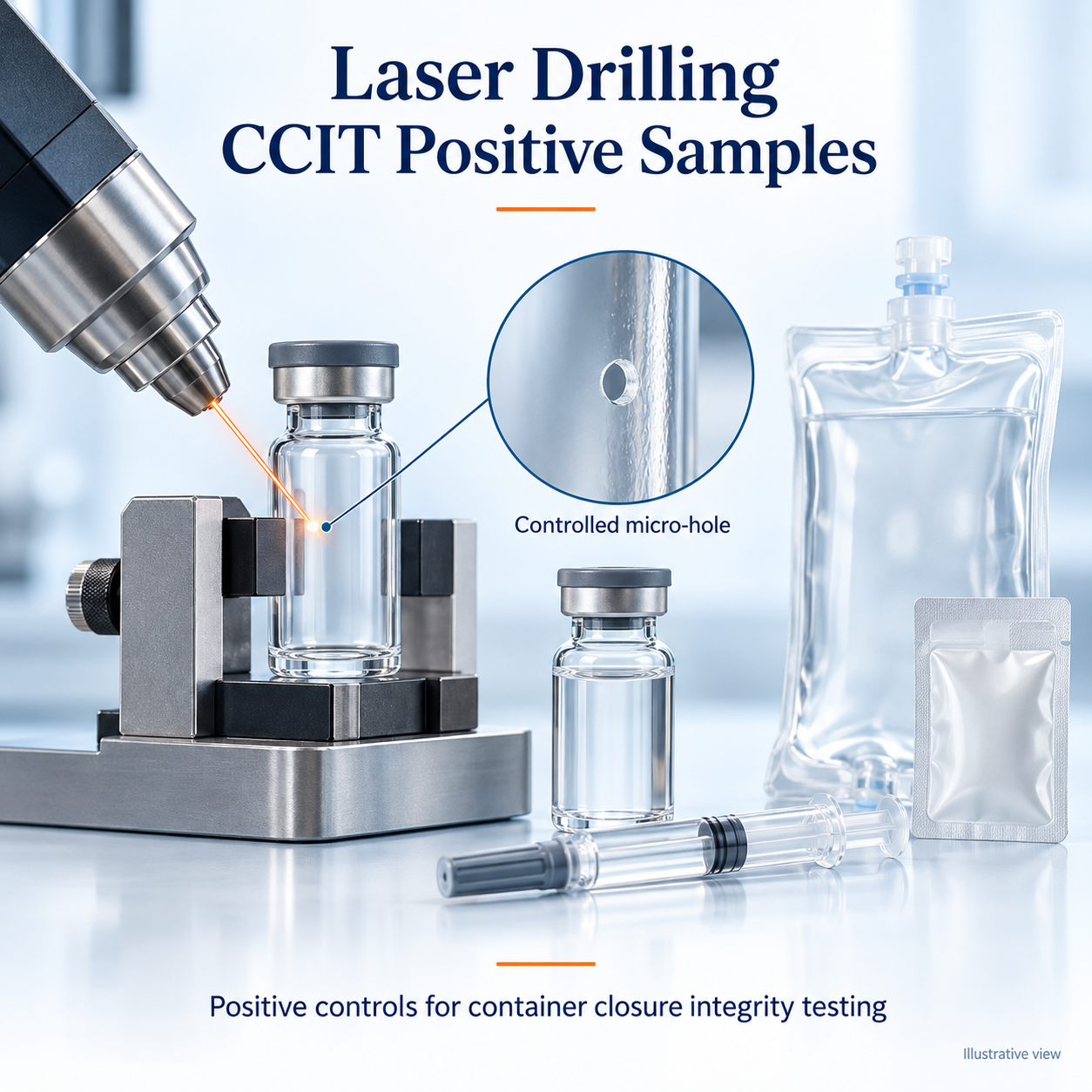
Laser Drilling - CCIT Positive Samples
Laser Drilling – CCIT Positive Samples
Laser Drilling – CCIT Positive Samples
Controlled Micro-Hole Defects for Container Closure Integrity Testing
Confianca Pharmazon (Confianca Technologies LLP) provides laser-drilled positive control samples for Container Closure Integrity Testing (CCIT). We create controlled micro-hole defects in pharmaceutical packaging to support leak-test method development, validation and verification of detection performance.
Our laser drilling service supports different container formats, including vials, syringes, pouches and pharmaceutical bags. Samples can be assessed in open, closed, empty or prefilled conditions, depending on the container, product and project requirements.
With laser-drilled holes as small as 1 µm, subject to technical feasibility, customised hole locations and supporting documentation, we help pharmaceutical teams prepare suitable challenge samples for their CCIT studies.
Request a Quotation | Discuss Your CCIT Sample Requirements
What Are CCIT Positive Control Samples?
CCIT positive controls are samples containing an intentionally introduced leak path. They are used to challenge a test method and assess whether it can detect a defined defect under specified conditions.
These samples help pharmaceutical teams investigate questions such as:
- Can the test method detect the selected challenge defect?
- Does detection performance remain consistent under the study conditions?
- How do container format, product fill and defect location affect the results?
- Are the selected test settings suitable for the intended application?
Positive controls provide a defined challenge for evaluating the performance of a container closure integrity test.
Our Laser Micro-Hole Drilling Service
We use laser drilling to introduce controlled micro-holes at selected locations on suitable pharmaceutical containers.
The sample design is agreed according to the packaging material, wall thickness, container geometry, required hole diameter and intended CCIT method.
Small-Diameter Micro-Holes
Our catalogue capability includes laser-drilled holes as small as 1 µm. Achievable dimensions and tolerances depend on the material, thickness and drilling location and are confirmed during technical review.
Defined Hole Placement
Micro-hole locations can be selected to meet the study requirements, subject to accessibility and container suitability. Agreeing the drilling position before preparation helps ensure the samples address the intended testing objective.
Customised Sample Sets
Hole-diameter sets and calibration packages can be customised according to customer requirements. This allows teams to specify different challenge conditions within a planned study.
Supporting Quality Documentation
A Certificate of Conformance and Quality Data Sheet are included with each laser leak-hole drilling order. Our catalogue states that measurement equipment is calibrated using a NIST-traceable standard.
The required measurement and documentation scope should be agreed before order confirmation.
Supported Container Formats
We assess laser drilling requirements for:
- Vials: Suitable pharmaceutical vial formats and accessible drilling locations.
- Syringes: Including prefilled configurations, subject to feasibility.
- Pouches: Flexible packaging requiring controlled leak defects.
- Pharmaceutical bags: Suitable bag materials and configurations.
- Other containers: Reviewed according to material, geometry and study requirements.
Container condition matters. Please specify whether the samples will be open or closed, empty or filled, and provide relevant product information when requesting a quotation.
Maintaining container closure integrity is essential to protecting pharmaceutical products throughout their shelf life. Guidance such as USP <1207> provides a framework for evaluating package integrity and selecting appropriate test methods.
How can you assess whether your leak-testing system reliably detects the defects relevant to your product and packaging?
Positive control samples with defined, characterised leaks provide a controlled challenge for evaluating detection performance. They support test method development, validation and ongoing performance verification, helping pharmaceutical manufacturers assess their testing systems under specified conditions.
Confianca Pharmazon provides customised positive control samples to support reliable, well-documented container closure integrity testing.
Advantages of Laser-Drilled Leak Test Holes
- Provide controlled leak paths to help simulate defects in glass and polymer packaging.
- Achieve tight dimensional tolerances, depending on the material and wall thickness.
- Offer customised hole-diameter sets and calibration packages to meet customer requirements.
- Include a Certificate of Conformance and Quality Data Sheet with each drilling order.
- Enable micro-hole sizes as small as 1 µm, subject to technical feasibility.
- Allow precise hole placement at specified locations.
- Offer expedited delivery, subject to feasibility and scheduling.
- Use measurement equipment calibrated against a NIST-traceable standard.
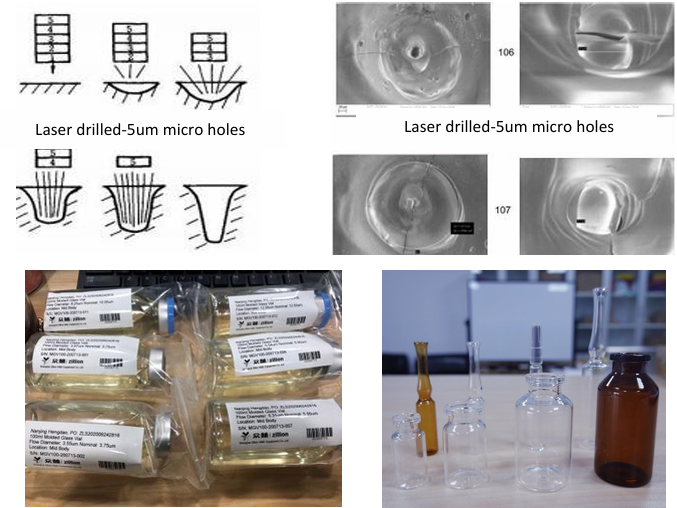
We prepare controlled micro-holes in a range of pharmaceutical containers, including vials, syringes, pouches and bags. Depending on technical feasibility, drilling can be performed on open or closed containers supplied empty or prefilled.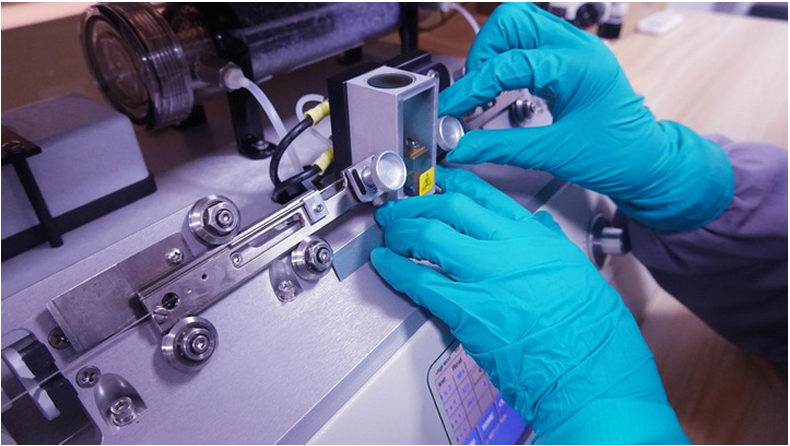
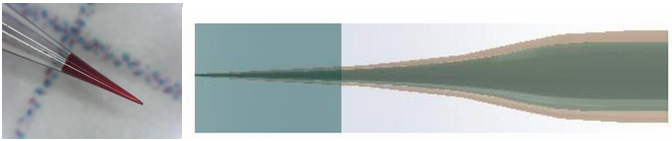
Micropipette
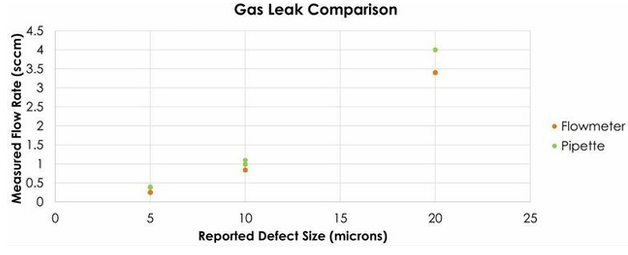
Micropipette tips can be used to create defined leak defects with openings as small as 0.1 µm. These fine tips are fragile and require careful handling during sample preparation and installation.
After insertion, the area surrounding the micropipette is sealed with epoxy resin. Microscopic examination helps assess the condition of the tip and surrounding seal, while flow calibration is used to characterise the resulting leak.
Tapered tip diameters typically have a tolerance of approximately ±20%. The effective leak-path length can be difficult to determine; for the described 2 µm glass tip, it is generally assumed to be below 0.5 mm. Tip geometry and residual trapped air should be considered when interpreting test results.
Capillary
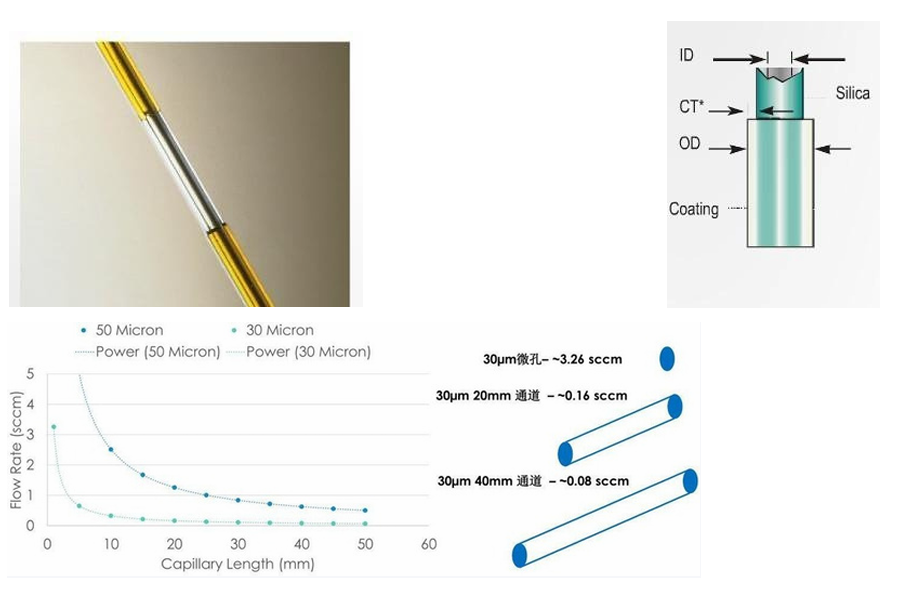
Quartz capillaries with a protective polymer coating provide a strong, flexible approach to preparing controlled leak paths. They can be incorporated into suitable packaging components to produce openings of approximately 1 µm or smaller, depending on the configuration.
During cutting and installation, care is required to prevent debris from partially blocking the opening and to maintain an intact seal around the capillary.
A limitation of this approach is that the leak path is considerably longer than its internal diameter and differs geometrically from many naturally occurring defects. This can influence leak behaviour and limit how representative the sample is in microbial challenge studies.
Artificially Prepared Crack-Type Defects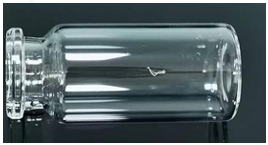
Artificially prepared crack-type defects are designed to resemble cracks that may occur in glass pharmaceutical packaging, including vials and ampoules.
Depending on the preparation method and verification capability, crack openings may be below 1 µm and extend into the nanometre range. These samples can support maximum allowable leakage limit (MALL) studies for rigid packaging, microbial challenge studies and headspace-protection assessments.
Suitably characterised crack-type samples may also be used to challenge highly sensitive CCIT methods, with their suitability assessed against the intended application.
Frequently Asked Questions
1. What are CCIT positive control samples?
CCIT positive control samples are pharmaceutical containers with intentionally introduced leak paths. They provide a defined challenge for evaluating whether a container closure integrity test can detect the selected defect under specified conditions.
2. How are laser-drilled positive samples prepared?
Laser drilling creates a controlled micro-hole at an agreed location on a suitable container. The target diameter, location and sample configuration are selected according to the packaging material and intended CCIT application.
3. Which containers can Confianca Pharmazon laser drill?
We assess laser drilling requirements for vials, syringes, pouches, pharmaceutical bags and other suitable containers. Feasibility depends on the material, wall thickness, geometry and accessibility of the requested drilling location.
4. What is the smallest laser-drilled hole available?
Our laser drilling capability includes holes as small as 1 µm, subject to technical feasibility. Achievable dimensions and tolerances are confirmed after reviewing the container and project requirements.
5. Can you prepare positive samples using filled containers?
Yes, empty and prefilled containers can be assessed for preparation. Please provide product details and indicate whether the containers are open or closed so we can review suitability and handling requirements.
6. Can we specify the hole size and drilling location?
Yes. Hole diameters, drilling locations and sample quantities can be customised, subject to feasibility. A marked photograph or container drawing helps communicate the required location clearly.
7. Are hole diameter and leak rate the same?
No. Hole diameter describes the physical opening, while leak rate describes the flow through that opening under defined conditions. Leak behaviour also depends on the path geometry, wall thickness, pressure conditions and product interaction. If your study requires a specified leak rate, please include this in your enquiry.
8. What are laser-drilled positive samples used for?
They support CCIT method development, validation and performance verification. They can also help investigate the effects of selected defect sizes, locations and container configurations on detection performance.
9. Are the same positive samples suitable for every CCIT method?
Not necessarily. Suitability depends on the test technology, container format, product characteristics and study objective. The sample specification should be aligned with the intended method before preparation.
10. Do laser-drilled holes exactly reproduce natural packaging defects?
Laser-drilled holes provide controlled leak paths, but their geometry may differ from naturally occurring cracks, irregular channels or seal defects. The selected positive control should be appropriate for the type of challenge required by the study.
11. What documentation is supplied with an order?
Each laser leak-hole drilling order includes a Certificate of Conformance and Quality Data Sheet. Any additional measurement, calibration or reporting requirements should be agreed before order confirmation.
12. Is the measurement equipment calibrated?
Our catalogue specifies that measurement equipment is calibrated using a NIST-traceable standard. Please discuss your traceability and documentation requirements with our team when requesting a quotation.
13. Can CCIT positive samples be reused?
Reuse depends on the sample, test method and handling conditions. Product residue, blockage, cleaning or physical damage may affect the leak path. Any reuse should follow an established procedure with appropriate checks to confirm continued suitability.
14. What alternatives are available if laser drilling is unsuitable?
Our catalogue also includes micropipette, capillary and artificially prepared crack-type positive samples. Each approach has different leak-path characteristics and handling considerations. Selection depends on the intended application and required challenge.
15. How long does sample preparation take?
Turnaround time depends on the container, defect specification, quantity and verification requirements. Expedited delivery may be available, subject to feasibility and scheduling. Please share your required delivery date with your enquiry.
16. What information is needed for a quotation?
Please provide the container type and material, filled or empty condition, required hole diameters, drilling locations and quantities. Include the intended CCIT method, any leak-rate requirements, documentation needs and preferred delivery timeline.
17. How can we order laser-drilled CCIT positive samples?
Contact Confianca Pharmazon with your container specifications and study requirements. Our team will review feasibility and confirm the preparation scope, documentation and pricing.
Email: gaurav@confiancapharmazon.com
Phone: +91 91733 19482 / +91 90810 12916
Location: Ahmedabad, Gujarat, India
-
Microbiology laboratory Consumables
Disposable ORABs Gloves
Original price was: ₹14,999.00.₹9,999.00Current price is: ₹9,999.00. Add to cart




Reviews
There are no reviews yet.